
Top Forex Trading Tips for Nigerian Traders
🇳🇬 Discover top forex trading tips for Nigerian traders! Learn to pick reliable brokers, manage risks smartly, and boost your profits in Nigeria's forex market.
Edited By
Emma Collins
Forex trading offers many Nigerians an attractive way to grow wealth, but it demands more than luck. To truly succeed, you must understand market dynamics, manage risks well, and remain disciplined. This introductory section sets the stage by highlighting what you need to know before diving in.
Forex trading involves buying and selling currencies to capitalise on price differences. Major currency pairs like USD/NGN or EUR/USD are common targets. Given the frequent naira volatility, Nigerian traders should watch local economic indicators alongside global cues. For example, Central Bank of Nigeria (CBN) announcements on interest rates or foreign reserves impact naira movements significantly.
Without strict risk control, losses can wipe out capital quickly. Always use stop-loss orders to cap potential losses. Never risk more than 1–2% of your trading capital on a single trade. Also, avoid overleveraging; many Nigerian brokers offer high leverage which can be tempting but dangerous.
A clear plan helps avoid emotional decisions during market swings. Define your entry, exit, and position size before opening a trade. Keep a trading journal to track performance and learn from mistakes.
Accessibility to trustworthy trading platforms matters. Platforms like MetaTrader 4, MetaTrader 5, and proprietary apps from reputable brokers provide tools for technical analysis, market news, and real-time pricing. Avoid unregulated providers to reduce the risk of fraud.
Successful forex trading combines knowledge, discipline, and practicality. Nigerian traders must adapt these principles to local market realities like currency fluctuations and platform access.
Before committing real money, practise on demo accounts. This gives hands-on experience without financial risk, helping you test strategies and understand platform functions.
By grounding yourself in these fundamentals, you pave the way for consistent growth. The following sections will explore detailed strategies and tips tailored for Nigerian forex traders seeking sustainable success.
Grasping the basics of forex trading is essential before diving into the complex world of currency exchange. Forex trading involves buying and selling currencies on a global scale, where the value of one currency is exchanged for another. This market operates 24 hours daily, five days a week, making it attractive for traders who want flexibility beyond the Nigerian stock market hours.
The foreign exchange market, or forex, is where currencies are traded internationally. Unlike the stock market, it has no central exchange or physical location; instead, it runs electronically over-the-counter. For a Nigerian trader, this means you can trade the US dollar, euro, British pound, and other currencies from your laptop anytime, provided you have internet access.
Forex trading reflects the economic health of countries and often reacts to geopolitical and financial events. For example, when the Central Bank of Nigeria (CBN) adjusts its policies or when oil prices shift, the naira’s value can fluctuate against the dollar, giving traders opportunities or risks.
Major currency pairs dominate the forex market and usually offer the best liquidity and lower spreads. These pairs include EUR/USD (euro and US dollar), USD/JPY (US dollar and Japanese yen), and GBP/USD (British pound and US dollar). Nigerian traders often focus on USD/NGN due to its direct impact on local investments and import-export activities.
Understanding these currency pairs helps in analysing trends and making decisions. For instance, if the dollar strengthens against the naira, importers may face higher costs, which can reflect on stock prices or inflation.
A few crucial terms repeatedly come up in forex trading: pip, lot, spread, and leverage. A pip is the smallest price movement a currency pair can make—usually the fourth decimal place. If EUR/USD moves from 1.1000 to 1.1001, that 0.0001 change is one pip. It’s like measuring how far your okada travelled to know your transit distance.
A lot refers to the size of the trade. A standard lot equals 100,000 units of currency, but many Nigerian brokers offer mini or micro lots, letting you trade with smaller sums, which suits those starting with limited capital.
The spread is the difference between the buying (ask) and selling (bid) price. Brokers make profits from this spread, so narrower spreads are preferable to traders as they lower transaction costs.
Leverage allows you to control a large trade position with a small amount of capital. For example, with 1:100 leverage, ₦10,000 can control ₦1,000,000 worth of currency. But this also increases risk, which you must manage carefully.
Understanding bid and ask prices helps you know when to buy or sell. The bid price is what buyers are willing to pay, while the ask price is what sellers want. The spread between these prices is where brokers earn, but it also shows the market's liquidity and volatility.
Knowing these basics is like learning how to read road signs before driving. Without them, you risk getting lost or making costly mistakes in forex trading.
By building a solid foundation with market understanding and terminology, Nigerian traders can avoid common pitfalls and trade more confidently in the fast-moving forex market.
Risk management stands as the backbone of successful forex trading, especially for Nigerian traders navigating a volatile environment like the naira. Without it, even the most promising trades can quickly erode your capital. Managing risks helps you protect your money, stay in the game longer, and avoid emotional decisions that hurt your trading outcomes.
Protecting your capital is fundamental in forex trading. The market is unpredictable, with currency prices swinging due to economic data, political events, or sudden announcements by central banks. Without a solid strategy to safeguard your funds, a single bad trade can wipe out weeks — or even months — of gains. For example, a trader using 10:1 leverage could lose ₦100,000 from a ₦10,000 investment if the market moves just 1% against their position. Preserving capital ensures you remain active in the market, ready to seize better opportunities when they arise.
Common risks in forex trading include market volatility, leverage misuse, and unexpected geopolitical issues. Market volatility can cause swift price swings that catch traders off guard. Leverage, while it magnifies profits, also multiplies losses when not correctly controlled. For instance, a political crisis in Nigeria could disrupt the naira exchange rate, leading to sharp fluctuations that impact your open trades adversely. Being aware of these risks helps you plan and respond appropriately.
Using stop-loss and take-profit orders is one of the simplest yet most effective tools for risk control. A stop-loss order automatically closes your trade when the price hits a certain level, limiting potential losses. Take-profit orders lock in gains by closing your trade once your target price is met. For example, if you buy USD/NGN at ₦460 and set a stop-loss at ₦455 and take-profit at ₦470, you cap your loss at ₦5 and secure a profit of ₦10 if the market moves your way. This removes guesswork and emotional bias from your trading decisions.
Position sizing and leverage limits are critical for managing your overall exposure. Position sizing means deciding how much of your capital to risk on each trade — commonly not more than 1-2%. Overcommitting increases your chance of large losses. Nigerian traders should also mind leverage offered by brokers; keeping it conservative (such as 5:1 or 10:1) can prevent devastating losses compared to extremely high leverage levels. For instance, trading ₦50,000 with a 10:1 leverage means controlling ₦500,000 in the market. If the price drops 2%, you've lost ₦10,000 – a fifth of your actual capital. Knowing how to size your trades and apply leverage thoughtfully safeguards your investment over time.
Consistently applying risk management techniques lets you survive losing streaks, build confidence, and grow steadily in the forex market.
Mastering risk control is not optional but a must for every trader aiming for longevity and profitability in forex.
Effective forex trading hinges on the ability to make informed decisions backed by solid analysis. Simply guessing market movements is like trying to catch a slippery fish with bare hands—unlikely to succeed. Traders who leverage analysis consistently improve their chances of spotting profitable opportunities and managing risks. Two main types of analysis guide these decisions: fundamental and technical.
Fundamental analysis involves examining economic indicators to understand what drives currency value. Indicators such as inflation rates, interest rates, unemployment figures, and GDP growth reveal a country's economic health. For instance, if Nigeria’s inflation rate spikes unexpectedly, it might weaken the naira because higher inflation erodes purchasing power. Traders who track such numbers can anticipate how currencies might move.
Central bank policies, especially by the Central Bank of Nigeria (CBN) and major counterparts like the US Federal Reserve, significantly impact forex markets. When a central bank raises interest rates, it generally strengthens the national currency as higher returns attract foreign capital. Conversely, rate cuts can cause depreciation. Geopolitical events—like elections, trade tensions, or conflicts—also shape sentiment and currency flows. For example, an election in Nigeria with uncertain outcomes may trigger naira volatility. Understanding these forces helps traders prepare for sudden shifts rather than be caught off guard.
Technical analysis focuses on price charts and trends, teaching traders to read patterns rather than rely on economic news alone. Charts display historical price movements, allowing traders to identify whether a currency is in an upward (bullish) or downward (bearish) trend. For example, a steady series of higher highs and higher lows on a USD/NGN chart signals an uptrend, suggesting it may be wise to buy.
Popular technical indicators include moving averages, Relative Strength Index (RSI), and Bollinger Bands. Moving averages smooth out price data, helping spot trend directions and reversals. RSI signals if a currency pair is overbought or oversold, pointing to potential trend changes. Bollinger Bands measure volatility—when bands widen, prices tend to swing more wildly. Nigerian traders can combine these tools to spot entry and exit points, improving timing and profitability.
Combining fundamental and technical analysis gives you a clearer window into market behaviour than using either alone. In the volatile world of forex trading, knowledge backed by analysis keeps your strategy sharp and your decisions confident.
By using both economic insights and chart patterns, you can navigate forex markets with more precision. Whether you’re dealing with naira jitters or global currency swings, solid analysis is your best ally.
Many Nigerian forex traders fall into common traps that undermine their chances of success. Recognising and avoiding these pitfalls can save you from costly losses and frustration. This section highlights errors often seen in the local trading community and offers practical ways to steer clear.
Trading driven by emotions rather than logic often leads to mistakes. When markets move rapidly, it’s easy to get caught up in fear or greed, which clouds judgment. For example, after a losing trade, a trader might immediately enter another position just to recover losses — a behaviour called "revenge trading." This impulsiveness usually worsens losses instead of fixing them. Emotional biases like overconfidence after wins or panic during downturns disrupt the disciplined approach forex demands.
Patience is a trader’s best ally. Waiting for clear signals before entering trades reduces unnecessary exposure to market noise. For instance, instead of chasing every small price movement, successful Nigerian traders often wait for confirmation through technical indicators or economic news. Patience also helps in adhering to stop-loss orders and not abandoning strategies prematurely. Over time, this discipline boosts overall profitability, allowing you to grow your capital steadily without emotional whiplash.
In Nigeria, the forex market’s growth has attracted many unregulated brokers offering tempting bonuses or low spreads. However, dealing with non-regulated operators exposes traders to fraud risks and difficulties in fund withdrawal. A regulated broker adheres to standards set by authorities such as the Securities and Exchange Commission (SEC) Nigeria. This means your funds are better protected, and you have access to dispute resolution channels. Choosing a licensed broker prevents falling victim to scams common in the fast-evolving Nigerian forex space.
Forex trading platforms require sensitive information like Bank Verification Number (BVN), NIN, and bank details. Neglecting digital security can lead to identity theft or financial loss. Always use brokers with strong encryption protocols and two-factor authentication. Avoid trading on public or unsecured Wi-Fi networks, which hackers exploit to intercept data. Regularly update your passwords and monitor your bank account for unusual transactions. Nigerian traders should also be aware of phishing attempts through emails or social media that impersonate brokers to harvest information. Vigilance on data security is essential in preserving both your funds and your trading reputation.
Many Nigerian traders can boost their chances by minding these common errors. Emotional control and careful platform choice build a foundation that separates successful traders from those who struggle.
By consciously avoiding overtrading, taming emotional impulses, and prioritising regulatory safety, you build a resilient approach suited to the local market realities. These everyday precautions serve as your forex trading armour against unnecessary loss and confusion.
Starting your journey in forex trading requires more than just understanding market basics. For Nigerian traders, practical steps tailored to local conditions can make all the difference between success and costly mistakes. This section covers key areas—from selecting the right trading platform to managing capital wisely amid naira volatility.
Choosing a trading platform suited to Nigerian traders is essential for smooth and secure trading. First, Nigerian users should prioritise platforms offering low transaction fees and fast withdrawal processes in naira. Platforms that support local payment methods such as bank transfers via USSD or mobile money services can save time and reduce costs. Security features like two-factor authentication and regulation by reputable authorities should never be overlooked. Without these, your funds and personal information could be at risk.
Among popular platforms accessible in Nigeria, MetaTrader 4 (MT4) remains a favourite due to its user-friendly design and wide broker compatibility. Other notable platforms include Binance Forex, which alongside crypto trading features, offers versatile currency pairs and local deposit options. FXTM and HotForex also support Nigerian traders well, providing naira deposits and widely trusted regulation. These platforms have proven records of reliable execution and provide mobile apps for trading on the go, crucial given Nigeria’s frequent power outages and busy lifestyles.
The naira's fluctuating value poses a real challenge when trading forex from Nigeria. Traders must remain vigilant about exchange rate impact, since currency value swings can unexpectedly affect trading capital and profits. It helps to keep an eye on CBN policies and general economic changes that directly influence the naira. Some traders hedge by converting some of their capital to stable foreign currencies within regulated platforms to shield against local currency depreciation.
Budgeting wisely and starting with a small amount of capital is a must for any Nigerian trader. Starting small means you learn the ropes without risking too much. For example, a new trader might begin with an amount between ₦10,000 and ₦50,000, gradually increasing as confidence and experience build. Keeping a close watch on your profit and loss helps avoid the temptation to overtrade, especially during ember months when market volatility typically spikes.
Managing your capital with care, choosing reliable platforms, and understanding the naira’s shifts can set you apart as a disciplined trader in Nigeria’s unique forex environment.
By focusing on these practical steps, Nigerian traders can establish solid foundations that support consistent growth and reduce avoidable losses. This pragmatic approach is vital before thinking of scaling or using high leverage.
🇳🇬 Discover top forex trading tips for Nigerian traders! Learn to pick reliable brokers, manage risks smartly, and boost your profits in Nigeria's forex market.
Explore proven forex trading strategies for Nigerian traders 🇳🇬. Learn market analysis, risk management, and tips to boost your trading success 📈💡.
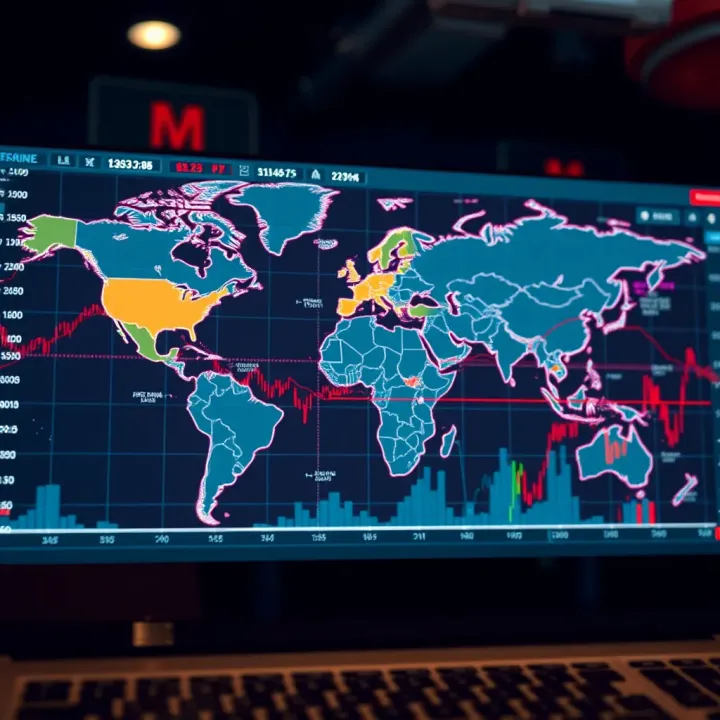
📈 Discover the best times to trade forex in Nigeria! Learn how market sessions, overlaps, and economic events impact currency moves for smarter decisions.
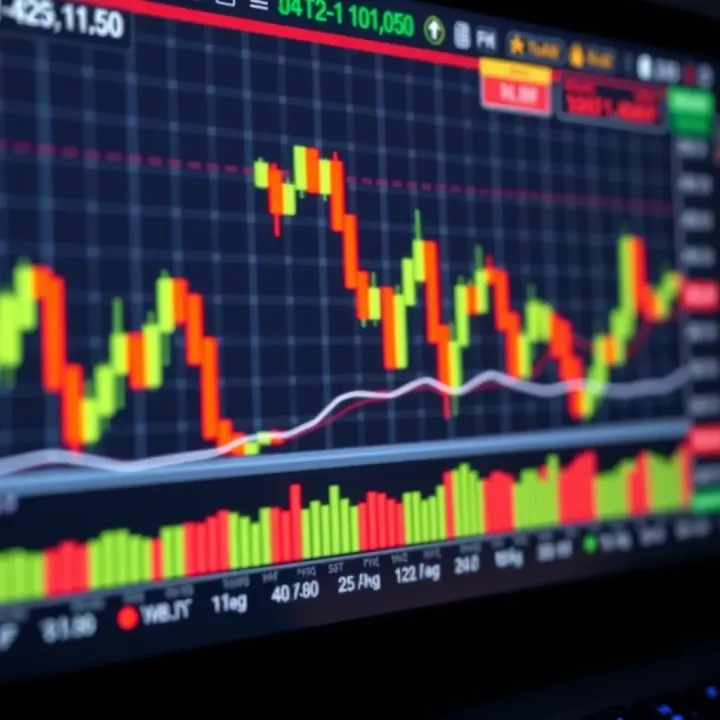
Master practical forex trading strategies for Nigerian traders 🇳🇬. Learn key concepts, risk tips, technical analysis, and trading psychology for steady wins 📈.
Based on 14 reviews