
Understanding Binary Bots in Trading
🤖 Discover how binary bots work in binary options trading, their risks, benefits, and tips for safe use to trade smarter in Nigeria’s market.
Edited By
Liam Parker
Chart analysis stands as a cornerstone for successful cryptocurrency trading. Nigerian traders, whether seasoned or new, rely on it to read market signals and make better decisions. Instead of guessing prices, they use charts to track price movements, spot trends, and understand when to buy or sell.
Cryptocurrency markets run 24/7, which makes real-time chart analysis even more vital. Unlike traditional stocks controlled by exchanges that close at certain hours, crypto prices shift nonstop. A trader observing Bitcoin or Ethereum prices through candlestick charts can quickly decide if the market is bullish or bearish based on patterns.
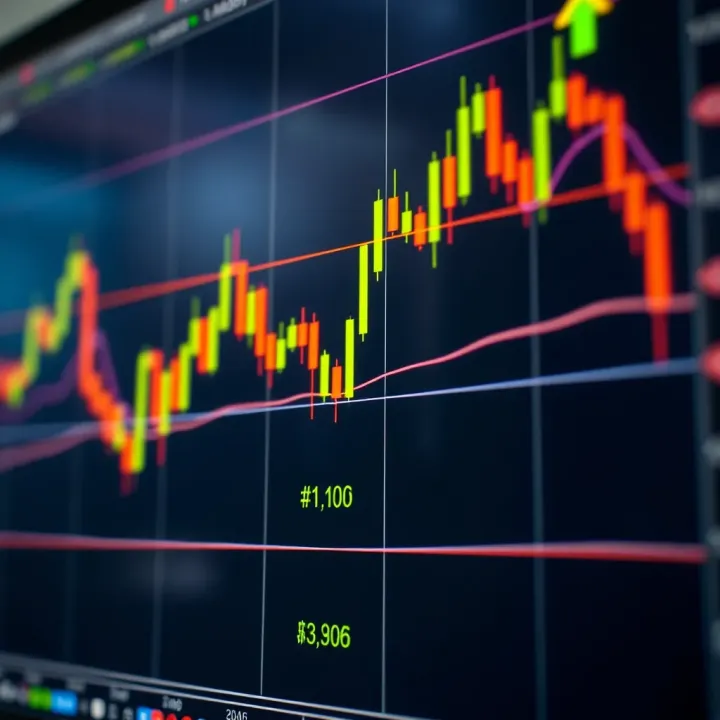
Chart analysis in crypto isn't about magic; it's about patterns, volumes, and indicators telling a story.
In Nigeria, where naira volatility and electricity challenges complicate trading, savvy investors leverage technical charts to prepare better. For example, they may use simple moving averages to smooth out price data, spotting when a coin like Binance Coin crosses above its average price, hinting at upward momentum.
Chart types commonly used include line, bar, and most popularly, candlestick charts. Candlesticks pack price action—open, close, high, low—into visual shapes that make spotting reversals or strong trends easier. Experienced traders often combine these with volume bars and indicators like the Relative Strength Index (RSI) to gauge overbought or oversold conditions.
Beyond individual coins, Nigerian traders track global crypto market charts to time their moves. Sudden pump-and-dump schemes or “whale” activities can show up on volume spikes or unusual candle forms, signalling caution.
Understanding chart analysis helps traders avoid emotional errors often seen in the local market, where FOMO (fear of missing out) drives uncalculated buys during price rallies. By reading charts properly, traders can identify support levels — price points where demand consistently stops a decline — giving them a clearer entry or exit strategy.
This guide will break down chart fundamentals, key indicators, and Nigerian-specific tips so you can sharpen your trading edge and manage risks wisely in the volatile crypto scene here at home.
Chart analysis is a fundamental skill for anyone involved in cryptocurrency trading. It helps traders understand market behaviour through historical price movements, volume changes, and patterns that hint at future trends. In the volatile world of crypto, where ₦ can swing sharply within minutes, having solid chart-reading skills is a practical advantage that improves decision-making and timing.
Charts offer a visual summary of how a cryptocurrency has performed over time, simplifying complex price data into readable formats. For Nigerian traders, charts become especially vital because local market conditions — like naira volatility and limited access to real-time data — demand quick and clear insights. By studying charts, traders spot momentum shifts, support and resistance levels, and potential entry or exit points without relying solely on news or sentiment.
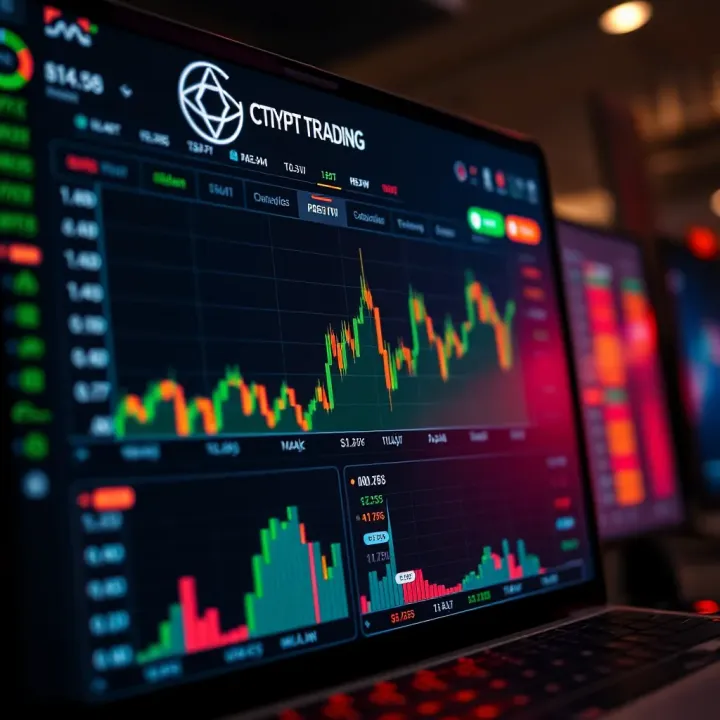
Candlestick charts are the most popular among crypto traders due to their rich detail in a simple display. Each candlestick shows four key price points: open, close, high, and low within a specific time frame. For example, a green candle usually means prices closed higher than they opened, signalling bullish sentiment. Traders in Lagos or Abuja often watch candlestick formations like "doji" or "hammer" to anticipate market reversals or continuations, helping time trades more effectively.
Line charts connect closing prices over a set period, forming a continuous line that tracks overall price direction. While less detailed than candlesticks, line charts offer a clean look at long-term trends. Nigerian investors new to crypto find line charts useful for simplifying analysis when they want a quick snapshot, such as tracking Bitcoin’s performance over months without the noise of intraday swings.
Bar charts resemble candlesticks but use vertical lines to show high and low prices, with horizontal ticks indicating open and close. They provide clear visual cues but can appear busier, requiring some practice to read. Some Nigerian traders prefer bar charts when evaluating volume alongside price, especially for less liquid altcoins where price gaps and volatility are more pronounced.
Crypto charts usually display time on the horizontal axis and price on the vertical. Beyond basic price action, they include volume bars, moving averages, and sometimes indicators like RSI. Good charts allow zooming into minutes or expanding to months to suit intraday traders or long-term investors. Having access to accurate data feeds and local-friendly platforms ensures Nigerian traders catch realtime changes, which is crucial given how quickly crypto markets move across global time zones.
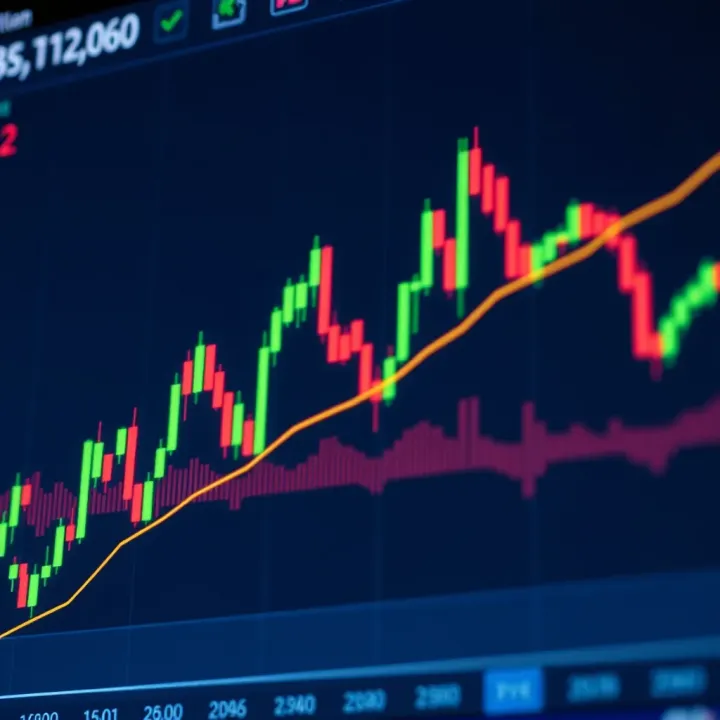
Understanding these chart fundamentals equips you to blend price action with market sentiment, improving your confidence in trading decisions.
Moving forward, recognising these basics can help you build a more disciplined and informed trading approach in Nigeria’s fast-growing crypto scene.
In crypto trading, charts alone don’t tell the full story. Essential indicators help you gauge momentum, strength, and potential price moves. Nigerian traders benefit when they understand and apply key indicators like moving averages, the Relative Strength Index (RSI), and trading volume—it sharpens decision-making and reduces guesswork.
Moving averages smooth out price fluctuations, showing the general direction over a set time. The Simple Moving Average (SMA) and Exponential Moving Average (EMA) are most common. For instance, a 50-day SMA offers a medium-term trend view, while a 200-day SMA highlights longer trends. When the short-term moving average crosses above the long-term one—known as the “golden cross”—it signals potential bullish momentum; the reverse, a “death cross”, may warn of a bearish shift.
In Nigeria, where crypto volatility is high, moving averages help filter noise and give clearer signals. For example, during the sharp naira depreciation periods, traders watched EMAs closely to time entries and exits. While not foolproof, combining moving averages with other indicators boosts reliability.
RSI measures overbought or oversold conditions by comparing recent gains to losses. The scale runs from 0 to 100; above 70 typically flags overbought assets that might soon dip, while below 30 suggests oversold conditions possibly leading to a rebound.
Consider a trader following Bitcoin on Binance Nigeria during a sudden pump: an RSI nearing 80 indicated it was due for a pullback, preventing a rush-in at peak prices. RSI also helps spot divergences—for example, if the price makes a new high but RSI lags behind, it hints at weakening momentum.
Traders must note that RSI can remain overbought or oversold for extended periods in strong trends, so it’s best used alongside volume or moving averages.
Volume reflects the number of coins traded during a session and confirms price moves. High volume during a price rise signals strong buyers, making the trend more trustworthy. Conversely, rising prices on low volume often indicate weak demand or potential reversal.
In Nigeria, volume can be volatile due to liquidity challenges on local exchanges like LUNO Nigeria or Binance NG. For example, dips in local volume during ember months often coincide with increased volatility, alerting traders to be cautious.
Volume spikes also expose fakeouts—false breakouts meant to trap traders. Sharp volume surges followed by quick reversals reveal manipulations, common in less regulated market spaces.
Mastering these indicators—moving averages, RSI, and volume—equips you to anticipate market moves rather than react blindly. Their combined use creates a practical framework to understand price behaviour and manage risk effectively.
Understanding and applying these essential indicators paves the way for more confident and informed crypto trading in Nigeria’s dynamic market.
Chart patterns reveal market psychology and trader behaviour, making them essential in crypto trading. Recognising these patterns helps you predict future price movements more accurately, even in crypto's volatile environment. This section focuses on two main types: trend continuation and trend reversal patterns, both widely used by traders to make buy or sell decisions.
Flags and Pennants: These patterns indicate brief pauses in an ongoing trend before the price continues in the same direction. Imagine a sharp rally in Bitcoin's price, then a brief consolidation with price moving sideways or slightly down within a small channel – this forms a flag. Pennants are similar but show a small symmetrical triangle instead. Both signal strong momentum and often occur after significant price moves.
For example, if Bitcoin surges from ₦20 million to ₦24 million and then forms a flag pattern for a few days, traders expect the price to break out upwards, continuing the rally. The practical benefit is clear: flags and pennants offer entry points during a strong trend, helping avoid chasing prices when the market is overheated.
Triangles: Triangles come in three forms – ascending, descending, and symmetrical – and signal potential continuation of the current trend. An ascending triangle features a flat top resistance and rising bottom support, showing buyers are gaining strength. Descending triangles have the opposite, with a flat bottom and a declining top, signalling selling pressure.
In crypto, an ascending triangle during an uptrend suggests buyers could push prices higher soon. Traders in Nigeria can watch Ethereum prices; when Ethereum holds support around ₦1.3 million while higher lows form, breaking above resistance often leads to a substantial price increase. Triangles guide traders to anticipate breakouts, allowing better timing for entering or exiting trades.
Head and Shoulders: This pattern forecasts a reversal from an uptrend to a downtrend. It has three peaks: a higher middle peak (head) between two lower peaks (shoulders). The neckline connects the lows between the shoulders. A break below this neckline signals a likely trend reversal.
To illustrate, suppose Litecoin rises steadily to ₦100,000, hits a peak, dips, rises again to an even higher peak (head), then a final lower peak forms before breaking below the neckline at ₦80,000. Traders take this as a sign to sell as prices may fall further. The inverse pattern (inverse head and shoulders) signals a reversal from downtrend to uptrend, useful when market sentiment shifts.
Double Tops and Bottoms: These patterns mark strong reversals after failed attempts to break resistance or support levels twice. A double top shows two peaks at roughly the same price level, failing to push higher, often leading to a downward move. Conversely, a double bottom has two lows testing support but failing to break lower, indicating an upward move ahead.
Nigerian traders monitoring Bitcoin could notice it struggles to break past ₦25 million twice, then drops sharply. This double top warns the bulls are weakening. Alternatively, during a bearish phase, a double bottom near ₦18 million could suggest buyers stepping in for a rally. These patterns are straightforward and practical, helping guide exit points and risk management.
Recognising and trading with chart patterns like flags, triangles, and head and shoulders can increase your chances of making profitable decisions in crypto trading, especially when combined with other indicators.
Mastering these common patterns sharpens your market sense, reducing guesswork in Nigeria’s fast-moving crypto scene. Always confirm with volume and indicators to avoid false signals.
Charts are powerful tools, but their usefulness depends a lot on how you apply them. In crypto trading, combining chart indicators with patterns sharpens your analysis, while avoiding common pitfalls saves your capital. Also, knowing the best tools to use, especially those popular in Nigeria, improves your trading efficiency and confidence.
Indicators like moving averages or Relative Strength Index (RSI) are best used alongside chart patterns rather than separately. For example, spotting a head and shoulders pattern signals a potential reversal, but if the RSI is already deep into the oversold territory, it strengthens the reversal case. On the other hand, if volume rises sharply when a breakout pattern happens, it confirms the strength of the move. Ignoring this could lead to mistimed trades. Successful traders check for at least two or three signals lining up before taking action.
One trap new traders often fall into is relying on a single indicator or pattern without confirming signals from other tools. For instance, acting on a moving average cross alone might mislead you during sideways markets. Also, failing to adjust time frames for confirmation can cause confusion; a bullish signal on a 5-minute chart might contradict the daily trend. Overtrading based on minor fluctuations, or chasing trends too late, often ends in losses. Remember, no chart predicts with absolute certainty—always manage risk with stop-loss orders and position sizing.
TradingView is a go-to platform worldwide and for Nigerian crypto traders too. Its user-friendly interface offers a vast library of indicators and the ability to draw and share chart patterns. The platform supports multiple time frames, which helps Nigerian traders adapt to different market speeds whether they are day trading or holding longer. Plus, the free version supplies almost everything a new or intermediate trader needs.
Beyond that, TradingView’s social community and script library allow you to explore custom strategies developed by others, helping build your chart-reading skills. It integrates with many brokers and crypto exchanges for seamless order execution.
Several Nigerian platforms and mobile apps tailor chart analysis tools with local market nuances, such as naira to dollar fluctuations affecting crypto prices. Apps like OPay and PalmPay sometimes offer simplified market data for their users investing in cryptocurrencies. Meanwhile, local fintech companies provide options to connect crypto wallets with local bank accounts, smoothing the process of moving funds—including profit-taking based on chart signals.
Using apps designed with Nigerian internet and power supply realities in mind means you can trade on the go without major disruptions. These local platforms often offer customer support in Nigerian English and understand the trading habits specific to the local context, which is a bonus.
Practical charting is more than spotting patterns—it’s about confirming moves, managing risk, and using the right tools. For Nigerian traders, combining global tech like TradingView with local platforms ensures both flexibility and relevance in a volatile crypto scene.
🤖 Discover how binary bots work in binary options trading, their risks, benefits, and tips for safe use to trade smarter in Nigeria’s market.
Explore top crypto trading platforms in Nigeria 🇳🇬. Learn about security, fees, user experience, and regulations to trade safely and smartly! 💹

🔍 Find the best crypto trading platforms in Nigeria! Explore fees, security, ease of use, local payment options, and regulations to trade smartly. ₦💰
Explore top crypto trading bots for Nigerian traders 🚀 Find key features, risks, and tips to choose the bot that matches your style and goals safely 🛡️
Based on 7 reviews