
Choosing the Best Forex Trading Robot for Nigerian Traders
Discover how to choose the right forex trading robot 🤖 for Nigerian traders. Learn key features, popular strategies, and tips for testing & deployment.
Edited By
Liam Parker
Automated trading in forex has become a popular strategy, especially for busy traders in Nigeria who want to keep pace with the fast-moving market without staring at screens all day. But with dozens of forex trading robots flooding the market, how do you know which one really fits your style and goals?
This guide is designed to cut through the noise and get down to what truly matters when choosing a forex trading robot. We'll break down the key features to look out for, common traps to avoid, and share practical advice that applies directly to Nigerian traders.
Whether you're a beginner who’s just dipping your toes into forex or a savvy investor scouting for efficiency and consistency, understanding what makes a trading robot tick will save you time, money, and frustration.
Picking the right automated system isn’t about fancy claims or flashy interfaces — it’s about finding a solid, reliable tool that plays to your strengths and market conditions.
Let’s get started by setting the stage with some core ideas behind forex robots and why they matter in today's trading landscape.
Getting to grips with forex trading robots is a must-have skill for anyone diving into automated trading. These tools are designed to take some of the heavy lifting off your shoulders by executing trades based on pre-set rules. Understanding what they are, how they tick, and how they differ from manual trading can save you a lot of headaches, especially in a fast-moving market like forex.
Forex trading robots, often called Expert Advisors (EAs) on platforms like MetaTrader 4 or 5, are software programs that automatically execute trades on your behalf. They follow specific algorithms designed to spot trading opportunities. They can work round the clock, keeping an eye on the market without needing a coffee break. For example, a robot might spot when the USD/Naira pair hits a certain price level and automatically make a buy or sell decision based on that.
These robots operate by processing market data such as price movements, trends, and indicators to make trading decisions. They rely heavily on historical data and real-time market information, entering or exiting trades according to the programmed strategy. This means they can react instantly to market changes, something manual traders might miss due to slower response times. Imagine you’re sleeping, and the forex market suddenly moves in your favor; the robot can execute your trade then and there without delay.
One big advantage of forex robots is they remove emotions from trading. Unlike manual trading, where fear or greed might cloud your judgment, robots execute trades strictly based on rules—no second-guessing or hesitation. Additionally, these robots can monitor multiple currency pairs simultaneously, which is tough for human traders juggling a few screens. A practical example would be a robot running 24/7, catching hourly breakouts on EUR/USD and GBP/USD pairs even while you’re offline or sleeping.
However, forex robots aren’t foolproof. They can’t adapt to sudden, unforeseen news events like political changes or central bank announcements that move markets unpredictably. For instance, during Nigeria’s recent election cycle, market reactions can be wild and short-lived—something a rigid algorithm might misread. Moreover, robots stick to their programmed strategies and can’t exercise judgment or intuition like an experienced trader might when the market behaves erratically.
Remember: While robots bring efficiency, understanding their limitations and keeping a watchful eye can prevent costly surprises.
In short, understanding these basic aspects helps you make better choices when selecting or customizing a forex robot. That way, you’re not just relying blindly on software but making informed decisions aligned with your trading style and market knowledge.
When picking a forex trading robot, knowing what features matter can save you from headaches down the line. Not all robots are built equally, and some features directly affect how well the bot performs under real market conditions. Focusing on reliability, risk management, ease of setup, and compatibility gives you a solid foundation.
A good trading robot should show consistent results, protect your capital through proper risk controls, be easy enough to install without a PhD in computer science, and work smoothly with your broker and trading platform. Skipping on these basics is like setting off in a car that might sputter out before reaching your destination.
Backtesting is a straightforward way to get a sneak peek at how the robot behaved in past market conditions. It runs the trading strategy over historical data and shows potential profit or loss. This is useful but not a magic crystal ball — market conditions change, and a robot that thrived on last year’s trends may stumble today.
Still, when a robot’s backtest results show consistent profits with reasonable risk over several years and different market situations, it’s a good sign. Look for detailed reports that include drawdowns and trade frequency, not just gross returns.
Live data beats backtests hands down because you see the robot in action under real-time pressures and slippage. Reliable forex robots often share verified live trading stats, showing how they handle actual money in different market phases.
Check if the robot's live record reflects steady growth and reasonable drawdowns rather than wild ups and downs. This suggests the bot’s strategies have real-world grit and aren’t just curve-fitted to past data.
Robots that let you control stop-loss and take-profit levels put you in the driver's seat. These settings help cap losses and lock in profits automatically, essential for protecting your account from unpredictable moves.
For example, a robot with adjustable stop-loss lets you tighten or widen risk based on current market volatility, giving you flexibility that suits your risk appetite.
Another key feature is the ability to adjust position size per trade. This avoids betting the farm on a single trade and helps manage overall portfolio risk. For instance, a robot that calculates position size as a percentage of your account balance prevents overexposure during high-risk periods.
Flexible sizing also means you can scale up or down easily as your confidence in the strategy grows or wanes.
Nobody wants a robot that demands hours of messing about to get running. A smooth, wizard-like installation process with clear instructions saves time and frustration. Robots designed for popular platforms like MetaTrader usually come with simple setup files or even one-click installers.
If you need to fiddle with code or complicated configuration files, that might be a red flag unless you're well versed in programming.
Once installed, an intuitive user interface is a must for tweaking settings, monitoring trades, or pausing the robot when needed. Look for robots that provide dashboards showing performance metrics, open trades, and error messages clearly.
Good customer support also matters—a responsive team you can reach by chat or email can make all the difference when something goes sideways.
Not every robot works with every broker. Make sure the robot supports reputable brokers available to Nigerian traders, like FXTM, OctaFX, or Exness. Compatibility issues can cause trades to fail or delayed executions.
It's wise to choose robots that officially support your chosen broker rather than forcing compatibility through workarounds.
MetaTrader 4 and 5 remain the dominant platforms in forex trading, thanks to their robust features and huge community support. Trading robots built as Expert Advisors (EAs) for MetaTrader fit naturally into this environment.
Robots made for other platforms might lack vital tools or face limitations. The smoother the integration, the less chance of glitches between your robot and the trading platform, which affects execution speed and reliability.
Remember, a well-chosen robot isn't about finding some silver bullet but about fitting the tool to your style, broker, and the realities of the Nigerian forex market.
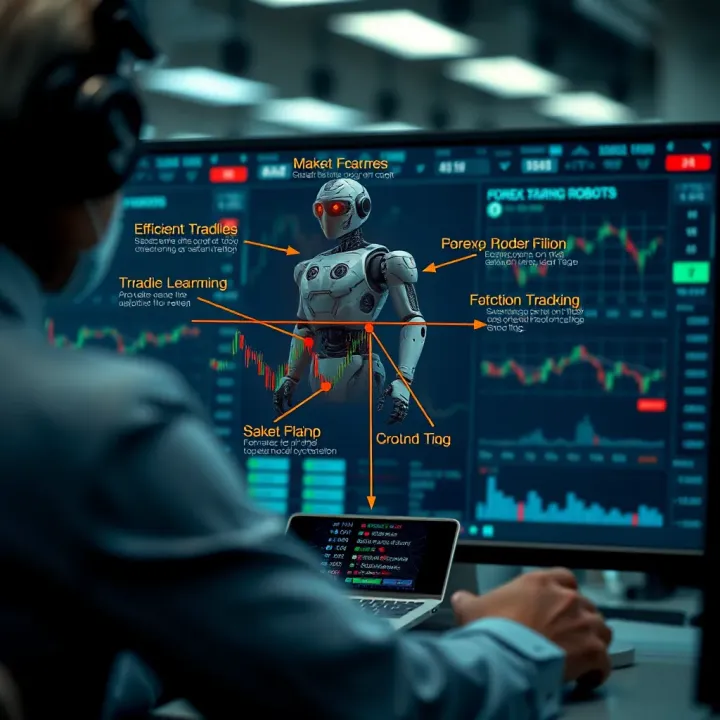
Selecting a robot with the right mix of these features sets you up better for navigating the ups and downs of forex trading, rather than gambling on blind guesses or clever marketing.
Understanding the different types of forex trading robots is essential when choosing the right one for your trading style and goals. Each robot operates with its own strategy, risk level, and market conditions suitability. In practical terms, knowing these categories helps you avoid wasting your time and money on a robot that doesn't align with your preferences or the realities of the forex market.
Among the commonly used forex robots, three major types stand out: trend-following robots, scalping robots, and grid trading robots. Each has a distinct way of approaching trades and managing risks. For example, a trend-following robot syncs with market momentum, while grid trading robots look to profit from price fluctuations regardless of market direction. Let's examine these types to see how they work and what traders need to watch out for.
Trend-following robots capitalize on sustained price movements in the market. They scan the forex charts for clear trends—whether upward or downward—and open trades in line with these shifts. Imagine the EUR/USD showing a steady climb over several hours; a trend-following robot will try to ride this wave by buying during the rise and holding until momentum fades.
This strategy relies on the theory that prices tend to continue moving in the same direction for some time. These robots often use moving averages or trend lines as technical indicators to detect and confirm trends. Because they react to confirmed market behavior, they tend to avoid noise and random price jumps.
One big plus is that trend-following robots can help traders avoid emotional decisions, sticking strictly to defined signals. They usually perform well in stable, trending markets, offering a lower risk compared to more aggressive styles.
On the flip side, they can struggle during sideways or choppy markets, leading to false signals and losses. For instance, if the market oscillates without clear direction, the robot might open and close trades prematurely, chipping away gains.
Scalping robots engage in high-frequency trading, opening and closing trades within seconds or minutes. They target tiny price changes, often aiming for just a few pips at a time. Think of it like a busy street vendor making lots of small sales rather than waiting for big orders.
Because forex markets can be quite volatile at short time frames, these robots continuously seek quick opportunities, sometimes executing dozens or hundreds of trades in a single day. This rapid-fire approach requires lightning-fast order execution and minimal latency.
Scalping robots suit traders who prefer fast action and don’t mind closely monitoring their accounts. They can be profitable for those prepared to handle the high transaction costs and the risks of slippage, especially on less liquid currency pairs.
However, they're less ideal for beginners or those with limited time to supervise trades. Also, some brokers restrict scalping or have spreads too wide for it to be viable. For example, Nigerian traders using brokers like FXTM or Alpari need to confirm scalping policies before using such robots.
Grid trading robots create a network of buy and sell orders around the current market price, spaced at set intervals, forming a "grid." When one order hits its target, the robot places a new order further down the grid, aiming to profit from ongoing price movements without predicting the direction.
To illustrate, if the USD/JPY is trading at 110, the robot might place buy orders at 109.50, 109.00, etc., and sell orders at 110.50, 111.00, etc. This way, it attempts to capture profits from price swings both up and down.
This method benefits traders in ranging or volatile markets by collecting profits on small price oscillations without relying on trend forecasts. It's like setting up multiple fishing nets to catch fish swimming any which way.
However, grid trading can be risky if the market suddenly trends strongly in one direction. The robot might accumulate losing positions without the ability to close them quickly, leading to large drawdowns. Careful capital management and stop-loss settings are crucial here.
Selecting the right type of forex robot means weighing these factors based on your trading style, risk appetite, and the market environment. No single robot fits all situations, so understanding how each operates will help navigate the forex waters more confidently.
Before trusting your hard-earned money to a forex trading robot, it's vital to evaluate and test it properly. This step is about more than just hoping for the best; it’s about understanding how the robot behaves under different market conditions. A bot might flaunt exceptional profits on paper, but without proper evaluation, its true performance remains a mystery. Effective testing can save you from nasty surprises and help ensure your robot fits your trading style and risk tolerance.
One practical example: a robot might have backtested brilliantly during a calm market phase but flounder in high volatility, which could wipe out your trading account fast. Testing it across different scenarios can reveal those weaknesses early. Nigerian traders should especially test bots on currency pairs like USD/NGN or GBP/USD that have local relevance to avoid surprises.
Backtesting is like a dress rehearsal for trading strategies. It uses past market data to see how a robot would have performed. Having robust historical data is key because the more varied and extensive the data, the better you can judge if the robot adapts well to different market trends and shocks. For instance, testing a bot on data covering the 2008 financial crisis up to recent years gives a good variety of conditions.
In practice, you want to see consistent profitability and manageable drawdowns during backtesting. This shows the robot isn’t just lucky in one market phase but can handle the ups and downs over time. Nigerian traders should ensure backtesting includes relevant time frames where local economic events affected forex pairs—this adds realism.
While backtesting is helpful, it isn’t foolproof. One big limitation is that the past doesn’t always repeat itself exactly. Market rules, economic dynamics, and liquidity change, so a bot that thrived in historical conditions might stumble in today's environment.
Another problem some traders face is over-optimization, where the robot is excessively fine-tuned to past data, producing great backtest results but poor live trading findings. This is called curve fitting and usually results in unexpected losses. For example, a robot might be perfect for USD/EUR from 2010 to 2015 but fail miserably afterwards.
Always treat backtesting results as guidance, not a guarantee. Combine it with other tests to get a fuller picture.
Using demo accounts is a safe way to check your forex robot without risking real cash. It simulates live market conditions closely enough to give practical insights into how the robot trades in real time. Nigerian traders, especially beginners, benefit from demo accounts on platforms like MetaTrader 4 or 5 to understand robot behavior and spot any operational quirks.
Demo testing helps identify if the robot executes trades as expected or encounters technical glitches. It also allows you to experiment with settings and risk management parameters, like stop-loss orders, adjusting things before real money is involved.
After a commendable demo run, it’s tempting to jump into live trading full throttle. However, differences like slippage, spread variations, and real money psychology can affect performance.
Start live trading with small amounts, maybe 1-2% of your capital, and increase gradually. Monitor closely how the robot reacts to real conditions, tweaking as necessary. This gradual step reduces blowout risk and lets you build confidence.
To illustrate, a Nigerian trader might start live testing a robot on USD/NGN with a modest stake, watching closely through volatile business cycles before committing larger sums.
By carefully evaluating through backtesting, demo runs, and cautious live testing, you give yourself a better chance of choosing a forex robot that can perform reliably—not just promise the moon.
Forex trading robots promise automation and efficiency, but understanding the risks and challenges they carry is essential before jumping in. These systems rely on algorithms and past data, which means they can be caught off guard by market changes or make decisions that seem sound on paper but fail in live conditions. For traders in Nigeria or anywhere else, awareness of these pitfalls is crucial to avoid unexpected losses and to adopt a smarter, more controlled approach to automated trading.
Forex markets are famously unpredictable, influenced by economic news, geopolitical tensions, or even sudden market sentiment shifts. Robots, no matter how advanced, can struggle to adapt instantly to these shocks because they operate within predefined rules based on historical patterns, not on real-time judgment.
For example, a forex robot that thrived during a stable economic period might falter during an unexpected announcement like a central bank intervention or a political crisis in Nigeria. The robot’s programmed parameters may not accommodate such rapid, steep volatility, leading to poor trades or significant drawdowns.
It is like having a GPS that works perfectly on a smooth road but struggles when faced with unexpected roadblocks or detours.
Use robots that include volatility filters or built-in safety mechanisms that pause trading during unusual market spikes.
Regularly monitor your robot’s performance especially around major news events and be ready to switch off automated trading temporarily.
Combine automated trading with manual oversight, allowing you to intervene when the market behaves erratically.
Choose forex robots with adaptive algorithms capable of recalibrating their strategies as market conditions evolve.
One of the sneakiest traps in using forex robots is over-optimization, also known as curve fitting. This happens when a robot’s settings are tweaked excessively to fit past market data perfectly. While it might seem like a winning strategy, this makes the robot highly specialized to historical conditions that never repeat exactly.
For instance, a robot designed to trade the EUR/USD pair might be fine-tuned with data from a calm year like 2017 but fail miserably when facing the volatile market swings of 2020. Overfitting leads to strategies that look flawless in backtests but crumble in live trading.
Rather than chasing perfect backtest results, look for strategies that perform reasonably well across varied market conditions.
Test robots not only on recent data but also on out-of-sample or future periods that weren't part of the initial optimization.
Avoid complexity – simpler strategies tend to generalize better and are less prone to curve fitting.
Keep optimization incremental and focus on robust parameters like risk management settings that improve survival rather than just profits.
Understanding these risks ensures you don't fall into traps that drain your trading account. It’s about striking a balance between trusting technology and staying alert to the market’s ever-changing nature. After all, no robot can fully replace human judgment, but a well-chosen, well-monitored system can definitely ease the trading grind.
For traders in Nigeria, using forex robots isn't just about setting and forgetting. The market here has unique quirks—you've got to tailor your approach to fit local realities. Practical advice ensures you can navigate these quirks, maximizing the tools while steering clear of common pitfalls.
Not all forex robots click with every broker. Nigerian traders should first check if their preferred brokers support the robots they're eyeing. For instance, MetaTrader 4 and 5 remain popular platforms supported by most brokers licensed by the Nigerian Securities and Exchange Commission (SEC) or central bank’s guidelines. Choosing a robot incompatible with your broker means trouble down the road. For example, if your forex robot only works with brokers offering ECN accounts and your broker doesn't provide that, you’ll hit a wall quickly.
Since Nigerian traders often focus on pairs like USD/NGN or EUR/USD due to local economic factors, picking a robot fine-tuned to these pairs can improve performance. Most robots are built for major pairs like EUR/USD or GBP/USD, but might struggle with pairs involving the Naira due to liquidity and volatility issues. Always check if the robot has been tested or optimized for your preferred pairs to avoid nasty surprises and stale signals.
Don’t just set it and forget it. Regularly reviewing your robot’s trade history and account statements will show you whether it’s pulling its weight. Performance can deteriorate because of changing market conditions, so logging at least weekly check-ins keeps you in the loop. Try to gauge things like win/loss ratios, drawdowns, and whether the robot sticks to its risk parameters. Tools like Myfxbook can help analyze performance objectively.
Forex markets aren’t frozen in time, and neither should your robot's settings be. If the Naira suddenly experiences volatility spikes due to political news or oil price shocks, it might be wise to tighten stop-loss levels or reduce position sizes. Some robots allow parameter tweaks without complicated coding, so use this flexibility to dial your strategy up or down depending on current market mood. Staying passive here can cost more than a little cash.
It's no secret that Nigeria's forex market is vibrant but comes with regulatory quirks. The Central Bank of Nigeria (CBN) and SEC govern forex transactions, but rules around automated trading can sometimes be unclear or evolving. For example, some brokers might not be fully licensed locally, making it riskier to deposit big sums. Understanding this environment helps prevent nasty surprises, like frozen funds or suspended accounts.
Before setting up your robot, know that legal stances on automation differ. While automated trading isn’t banned in Nigeria, it’s critical to keep tabs on broker guidelines and local fintech regulations. Some brokers may require disclosure of automated systems or limit trading styles. Also, the responsibility lies with the trader to ensure compliance with tax laws and reporting. Keeping good records and staying informed from sources like SEC announcements can protect you from unintended legal troubles.
For Nigerian traders, blending solid local knowledge with the right forex robot unlocks more than just automated trades — it lays the foundation for smarter, safer forex ventures in a challenging market.
It's easy to get caught up in the buzz around forex trading robots and what they promise. That makes tackling common myths about these tools a must for any trader looking to use them wisely. Clearing up misconceptions helps keep your expectations grounded and protects your wallet from costly mistakes.
For example, many traders jump in thinking these robots are a magic bullet for profit, ignoring the fact that the forex market is wild and unpredictable. Others believe that firing off tons of trades will rake in easy dollars, not considering how this can eat into your gains through fees and slippage.
By debunking these myths, you get a clearer picture of what trading robots can realistically do and how best to use them. It’s like cleaning your glasses—once clarity sets in, decisions become sharper and more sensible. Let’s break down the two biggest myths that often trip traders up.
No forex robot can promise profits without fail. The market doesn't read scripts, no matter how clever your algorithm is. Good robots are tools—like a hammer or a wrench—but it’s up to the trader to use them well and understand they won't win every time.
For instance, even top-rated robots like Forex Fury or GPS Forex Robot have periods of losses tied to changing market conditions. Expecting them to deliver a steady stream of profits regardless of the environment is setting yourself up for disappointment.
Having realistic expectations means seeing these robots as helpers, not magic money-makers. Use them to automate tasks, reduce emotional trading, or follow strategies that you'd find tough to execute manually.
Forex robots rely on historical data and set rules, but the market doesn’t always follow the script. Sudden events like geopolitical crises or unexpected central bank moves can throw off robot calculations.
Take the Nigerian Naira, for example—it can react sharply to local policy changes or oil price swings, which might not be captured immediately in robot algorithms tuned to global pairs or stable environments.
This is why regular monitoring and updating robot settings is key. Being aware of current market trends and adjusting your robot strategy prevents simple automation from turning into blind faith.
Bombarding the market with more trades isn't a sure recipe for success. A robot that takes fewer but smarter trades often beats one firing off dozens daily without clear strategy.
Consider scalping bots that place many tiny trades. While they can generate profits, each trade has a cost. If those trades aren’t carefully filtered, you could end up worse off.
Good quality trades focus on setups with better risk-to-reward profiles, increasing the chance of bigger wins and limiting losses.
Every trade you make carries some cost—spreads, commissions, or slippage. High-frequency trading robots rack these up fast.
For Nigerian traders using brokers like Stanbic IBTC or FXTM, frequent trading can erode profits, especially if spreads widen during volatile periods.
That’s why understanding how fees work with your broker and factoring them into your robot’s trading style is crucial. Sometimes, slowing down and focusing on fewer trades improves your bottom line.
Trading robots can be powerful tools, but only when you use them with a clear, experienced eye. Busting myths keeps you grounded and helps you avoid common traps that eat away at your trading success.
By steering clear of common misconceptions, you position yourself to pick forex trading robots that fit your style, your goals, and your market conditions—especially here in Nigeria’s dynamic forex scene.
Discover how to choose the right forex trading robot 🤖 for Nigerian traders. Learn key features, popular strategies, and tips for testing & deployment.
💹 Explore forex trading designed for Nigerians! Learn key concepts, spot risks, and get practical tips to trade currencies confidently and smartly.
Explore forex trading in Nigeria 🇳🇬 with tips on brokers, strategies, risks, regulations, and market opportunities to trade smarter and safer 💹
Explore top forex trading apps for Nigerians 📱. Learn key features, pros & cons, and tips to trade smartly while managing risks in volatile markets 💹.
Based on 6 reviews