
Best Times for Forex Trading in Nigeria
📈 Discover the best times to trade forex in Nigeria! Learn how market sessions, overlaps, and economic events impact currency moves for smarter decisions.
Edited By
Isabella Clarke
Navigating the forex market in Nigeria requires more than just luck or guesswork. Traders need the right tools to analyse trends, time their trades, and protect against sudden market swings. The forex market runs 24/5, and with naira fluctuations, economic policies, and global events stirring volatility, having reliable equipment isn’t a luxury—it’s a necessity.
In Nigeria, where access to trading infrastructure can vary, understanding what tools serve your needs best can save you time and money. Whether you are a beginner exploring forex trading or a seasoned investor, these tools help you make informed decisions and avoid costly mistakes.
From intuitive trading platforms to real-time charting software, economic calendars, and even automated trading systems, each instrument plays a precise role. For example, platforms like MetaTrader 4 and 5 are popular for their user-friendly interface and mobile apps, allowing traders in even remote parts of Lagos or Abuja to monitor positions closely.
Successful forex trading depends heavily on using the right mix of technology and data to catch opportunities early and manage risks smartly.
To give you a clearer picture, here are the key tools every Nigerian forex trader should consider:
Trading Platforms: Software or apps providing access to currency markets, order execution, and account management.
Charting Software: Tools that present historical and real-time price movements to spot key patterns and support/resistance levels.
Economic Calendars: Listings of upcoming economic reports and announcements affecting currency values, such as CBN policy decisions or US non-farm payroll releases.
Automated Trading Systems: Algorithms that execute trades according to set strategies, reducing emotional bias and permitting 24/5 operations.
This section will set the foundation for understanding these essential tools and how they enhance your trading experience in Nigeria's vibrant but challenging forex environment.
Choosing the right trading platform is a key step for Nigerians keen on succeeding in forex trading. The platform serves as your gateway to the market, where you analyse trends, place trades, and track performance. Nigerian traders especially need platforms that blend reliability with features suited to local internet conditions and available devices.
MetaTrader 4 and MetaTrader 5 remain the most popular choices globally, including in Nigeria. MetaTrader 4 (MT4) is prized for its simplicity and robust charting tools, making it ideal for beginners and seasoned traders alike. MT5, the newer version, offers enhanced order types, timeframes, and an economic calendar integrated within the platform, which can be helpful for traders tracking global events affecting currencies.
Both MT4 and MT5 support automated trading via Expert Advisors, enabling Nigerian traders to run strategies round the clock, even when offline. These platforms work on Windows and Mac desktops, and their mobile apps for Android and iOS give traders flexibility to manage positions on the move, crucial in Lagos where internet can be patchy and you might need to monitor trades while commuting.
cTrader offers another strong option, designed with a focus on transparency and faster execution speeds. It boasts a clean interface and advanced charting features that appeal to more technical traders. One feature Nigerian traders appreciate is cTrader’s depth of market function, which reveals liquidity available at different price levels. This helps when trading volatile pairs like USD/NGN, giving better insight into market dynamics.
cTrader is available for desktop and mobile devices, supporting Windows, Mac, Android, and iOS. Its cloud-sync feature keeps your settings and trading history uniform across devices, so you don't lose track if you switch from your desktop at home to a smartphone on the go.
Broker-specific platforms are developed by brokerage firms targeting specific client needs. For instance, some Nigerian brokers may offer platforms that integrate local payment options like Quickteller or Paga directly into the system. These proprietary tools sometimes provide better local customer service and tailored features to manage naira liquidity challenges.
However, broker platforms might lack the broad community, plug-ins, and analytical depth offered by well-established third-party platforms like MT4 or cTrader. Since platform stability and data accuracy are critical, Nigerian traders should assess broker platforms through demo accounts before committing real money.
User Interface and Usability matter a lot when choosing a platform. The look and feel influence how quickly you can interpret charts, place orders, or make adjustments. Nigerian traders new to forex often benefit from clear menus and easy navigation, reducing chances of costly errors. Platforms like MT4 are favoured for being straightforward and well-documented.
Seasoned traders might prefer more customisable interfaces with options to set hotkeys or drag-and-drop modules for faster decision-making. At the same time, some platforms use complicated layouts that can be daunting without proper training, so usability must align with your experience level.
Execution Speed and Reliability can affect your profitability directly. Forex trading requires timely order execution; delays can turn winning trades into losses, especially when market swings rapidly after economic news. Nigerian internet infrastructure still faces challenges, with occasional slowdowns or outages, so choosing platforms with efficient server networks and low latency is vital.
For example, cTrader and MT5 tend to offer faster execution than some broker platforms, reducing slippage. Also, some brokers provide accounts on servers geographically closer to Nigerian traders, helping speed up trade execution. Always test a platform's real-time performance during demo trading phases.
Compatibility with Devices is critical for Nigerian traders who may switch between desktops, laptops, tablets, or smartphones. Lagos traffic or rural internet access might force you to rely more on mobile apps. Ensure your chosen platform has stable apps compatible with common Nigerian devices like Tecno, Infinix, or Samsung phones.
Platforms with cloud saving and cross-device synchronisation let you pause trading on a desktop and resume on mobile without losing track of open positions or charts. This flexibility is a big plus for busy Nigerian traders managing multiple commitments alongside trading.
The choice of platform is your trading foundation; pick based on usability, execution speed, and device fit to make the most of Nigeria’s dynamic forex market.
By examining these factors, Nigerian forex traders can select tools that serve both their trading strategies and everyday realities effectively.
Charting and technical analysis tools are vital for Nigerian forex traders aiming to read market behaviour and make informed trading decisions. These tools help break down complex price movements into understandable visuals and indicators, making it easier to spot trends, turning points, and potential risks. Using these tools properly allows traders to move beyond guesswork and adopt a systematic approach.
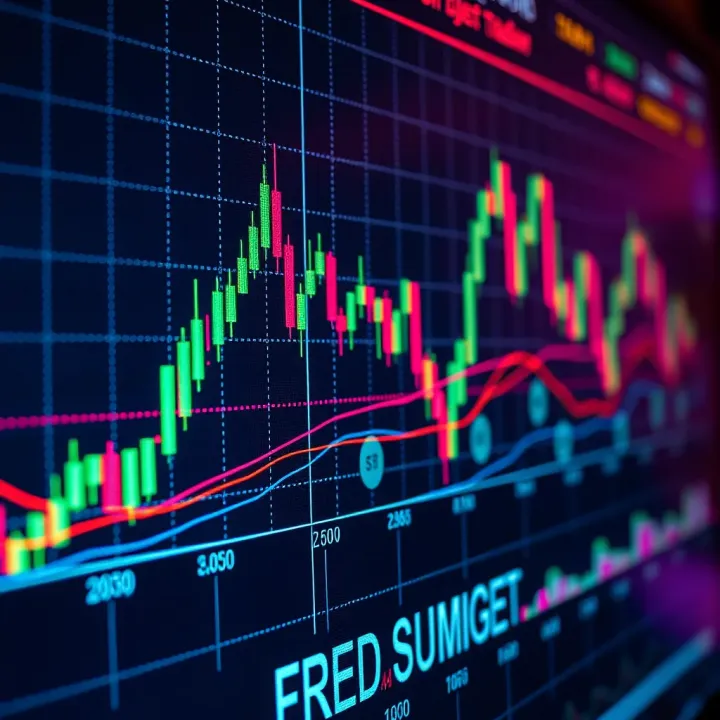
Candlestick charts show price movements within a specific period, with each "candle" reflecting the open, close, high, and low prices. This visual makes patterns—such as reversals or continuations—much easier to spot compared to plain line charts. Line charts connect closing prices over time to reveal overall direction, but lack the depth of candlestick charts, which include more detailed price information. For instance, during the busy ember months when markets are volatile, candlestick charts can quickly highlight market sentiment shifts that line charts might mask.
Moving averages smooth out price data to identify trends by averaging past prices over a set period. Nigerian traders often use the 50-day and 200-day moving averages together to spot longer-term trend changes, such as when the 50-day crosses above the 200-day, signalling a potential buy opportunity. Oscillators, like the Relative Strength Index (RSI) or Stochastic indicator, show if an asset is overbought or oversold, helping traders decide when a reversal might occur. For example, if the RSI on the USD/NGN pair reaches above 70, it might be a signal the naira’s strength is temporarily overstretched.
Fibonacci retracements identify likely pullback levels in price using mathematical ratios derived from the sequence. Traders use these to find entry or exit points after market corrections. Support and resistance levels, drawn from past highs and lows, indicate where price may stall or reverse. For example, if the naira-dollar exchange rate repeatedly bounces back at ₦460, that price acts as a support. Combined with Fibonacci levels, these tools help pinpoint where price might change direction, a huge advantage before planning trades.
Knowing the direction of the market saves Nigerian traders from costly false starts. If the overall trend is bullish on the USD/NGN pair, traders might focus on buying dips instead of trying to sell. Simple trendlines or moving averages can confirm whether the market is trending up, down, or ranging sideways. This understanding guides when to enter trades and how aggressively to manage risk.
Technical analysis sharpens decisions about exactly when to get into or out of a trade. For instance, combining candlestick reversal patterns with support levels increases the chance of a successful entry. Similarly, watch for resistance zones or overbought signals (like RSI above 70) to consider exiting. Precise timing like this avoids chasing price moves and locking in profits more reliably.
Setting stop loss and take profit orders is part of solid risk management and relies heavily on chart analysis. Nigerian traders use support and resistance points or ATR (Average True Range) indicators to fix stop loss levels so they don’t lose more than they can afford. Take profit points may align with previous highs or Fibonacci extensions. For example, after entering a long position on the EUR/USD, a trader might place a stop loss just below recent support at 1.0800 and take profit near 1.1000 where resistance lies. This approach protects capital and locks in gains without emotional guesswork.
Good traders in Nigeria treat charting and technical analysis tools as more than just software—they rely on them to make sense of noisy markets and to trade with confidence.
Understanding fundamental analysis resources is crucial for Nigerian forex traders aiming to navigate the market with insight. These tools allow traders to assess the broader economic environment by examining key financial data and news events. Unlike technical analysis, which focuses on charts and patterns, fundamental analysis digs into underlying factors shaping currency values.
The Central Bank of Nigeria (CBN) regularly releases policy decisions, inflation reports, and foreign exchange reserves data, all of which influence the naira's strength. For instance, changes in the Monetary Policy Rate (MPR) can lead to sharp naira swings. Traders monitoring these announcements get a clearer sense of government stance on inflation control or economic stimulus.
Beyond CBN, indicators like Nigeria’s GDP growth rate, unemployment figures, and trade balances directly affect market sentiment. Keeping track of these helps traders anticipate naira volatility during economic reports, especially when the data deviates from expectations.
Currency values respond to international economic events as much as local ones. Indicators such as US Non-Farm Payroll numbers, European Central Bank policy shifts, or crude oil prices have ripple effects on the naira, given Nigeria's heavy oil dependence.
For example, a drop in global oil prices can weaken Nigeria’s FX reserves, adding pressure on the naira. Traders informed about such global data avoid being blindsided by abrupt market moves. In practice, this means checking key releases for the US, China, and Europe, as these economies heavily influence forex trends.
Following reliable news outlets is vital to access timely updates and expert analysis. Traders in Nigeria often use platforms such as Bloomberg, Reuters, and local financial news sources like BusinessDay or Nairametrics. Mobile apps providing push notifications for forex news help traders stay alert to breaking events.
Such timely information empowers traders to react quickly, whether it's a sudden CBN policy change or a geopolitical development. However, discerning fact from speculation is essential—relying on reputable sites mitigates misinformation risk.
Adjustments in interest rates typically cause immediate forex market movements. A hike in rates by the CBN tends to strengthen the naira because it attracts foreign capital seeking higher yields. Conversely, rate cuts might weaken local currency as investors look for better returns elsewhere.
Knowing how the market reacts allows traders to position themselves before or after official announcements, either by increasing exposure or staying on the sidelines during uncertain periods.
Political instability, conflict, or diplomatic crises can unsettle forex markets. For Nigeria, events such as state elections, security challenges, or international disputes often result in currency swings as risk appetite shifts.
For example, unexpected election outcomes could trigger short-term volatility in the naira. Traders who monitor these geopolitical developments are better placed to manage potential risks and capitalise on openings.
Local policies on fuel subsidies, foreign exchange restrictions, or budget approvals directly influence trader sentiment. The naira’s exchange rate often reacts strongly to statements from government officials or legislative changes.
Consider the effect of new forex regulations by the CBN on dollar supply or changes in import tariffs—knowing this helps traders anticipate market direction rather than react too late. Staying abreast of these developments through trusted local sources provides a trading edge.
Effective forex trading in Nigeria demands more than charts; understanding fundamental resources bridges the gap between data and market behaviour, equipping traders to make informed decisions.
Automated and copy trading solutions have become essential tools for Nigerian traders who want to optimise their strategies without being glued to screens all day. These tools allow traders to automate repetitive trading decisions and learn from experienced investors by mirroring their trades. For many beginners and even seasoned traders, they offer an effective way to balance opportunity with time constraints.
Automated trading relies on Expert Advisors (EAs) or bots programmed to execute trades according to predefined rules. This method can help reduce emotional bias—common in manual trading—and execute trades faster than any human. For instance, a bot can instantly close positions when stop-loss targets are hit, limiting losses on volatile currency pairs like the naira/dollar.
However, automated trading carries risks. Bots operate on past data and can fail during unexpected market events or sudden political developments. They may also magnify losses if settings aren’t carefully monitored. Nigerian traders often overlook that EAs require regular optimisation to respond to changing market conditions.
When choosing EA providers, Nigerian traders should look out for transparency and past performance records. Reputable sources like MetaTrader Market offer popular EAs validated by user reviews. Local brokers sometimes provide proprietary bots tailored to the Nigerian forex scene, but verifying their credibility is key. Always test any EA on a demo account before committing real funds.
Copy trading allows you to automatically replicate trades of skilled investors. This setup is particularly helpful for beginners who lack the experience to analyse markets deeply. By following successful traders, you stand a better chance of earning consistent returns without doing all the heavy lifting.
In Nigeria, platforms such as eToro, ZuluTrade, and local brokers supporting copy trading are growing popular. They offer user-friendly interfaces where investors can browse performance histories and risk profiles of signal providers.
Evaluating signal providers requires attention to consistency, risk management strategies, and transparency. Check how these traders performed during recent volatile periods, such as naira devaluation or CBN policy changes. Avoid providers promising guaranteed profits or those with limited trading history.
Automated and copy trading solutions are practical shortcuts, but they're not magic. Diligence in selection and ongoing monitoring make the difference between profit and loss.
Using these tools alongside traditional analysis strengthens your forex trading toolkit. Nigerian traders who responsibly combine automation with personal oversight often experience steadier growth and less stress navigating the market’s ups and downs.
Effective risk and money management tools are essential for forex traders to safeguard their capital and maximise profits. Without these, even solid trading strategies can fall apart quickly, especially in volatile markets like Nigeria's forex scene where naira fluctuations and global factors can quickly impact positions. These tools help traders maintain control over their exposure, calculate potential losses, and make informed decisions on position sizes and exit points.
Position sizing calculators help traders determine the appropriate size of a trade relative to their total capital and risk appetite. For instance, if you have ₦500,000 in your trading account and want to risk only 2% per trade, the calculator tells you the maximum amount to expose on any single deal — in this case, ₦10,000. This prevents overtrading and massive losses that could wipe out your capital. Given the volatility in the forex market and naira exchange rates, precise sizing helps you stay within limits and protects your investment.
These tools assist traders in setting specific price points that automatically close a trade to contain losses or lock in profits. In Nigeria’s forex market, unexpected events like CBN policy changes or geopolitical tensions often cause sudden price swings. Placing a stop loss at a logical support level can shield you from rapid declines, while a take profit order ensures gains aren’t lost to market reversals. Many platforms offer visual aids and automatic calculations, making it easier to adjust these levels in line with market volatility and your personal risk management strategy.
Keeping a detailed trade journal is a straightforward but powerful tool. Recording every trade — including entry and exit prices, strategies used, and market conditions — enables you to review your past decisions critically. Traders in Nigeria often overlook this, but consistent journaling reveals patterns in performance and highlights common mistakes. Several software options can automate this process, providing graphs and reports that show your profit and loss trends clearly.
Key metrics such as win rate, average return, maximum drawdown, and risk-reward ratio offer deep insights into your trading style's effectiveness. For example, if your average profit per trade is ₦5,000 but your maximum drawdown reaches ₦50,000, it shows risk management needs urgent review. Regularly analysing these figures helps you adjust your strategy—whether by tweaking position size, improving entry timing, or refining stop loss levels—to improve consistency and reduce losses over time.
Smart money management is what separates casual dabblers from serious forex traders — protect your capital with the right tools and keep improving with careful record-keeping.
By embracing these risk and money management tools, Nigerian forex traders can stay resilient despite market uncertainties and steadily build their trading skills and account balance.
📈 Discover the best times to trade forex in Nigeria! Learn how market sessions, overlaps, and economic events impact currency moves for smarter decisions.
Master practical forex trading strategies for Nigerian traders 🇳🇬. Learn key concepts, risk tips, technical analysis, and trading psychology for steady wins 📈.
🇳🇬 Discover top forex trading tips for Nigerian traders! Learn to pick reliable brokers, manage risks smartly, and boost your profits in Nigeria's forex market.

📈 Master forex trading in Nigeria with effective strategies: trend following, range trading, breakouts & savvy risk management for steady success.
Based on 11 reviews