

Effective Forex Trading Strategies for Nigerian Traders
Explore effective forex trading strategies tailored for Nigerian traders 🇳🇬. Learn risk management, analysis methods, and how to adapt plans for local markets 📈💼.
Edited By
Benjamin Shaw
Forex trading can feel like a maze, especially when the market refuses to follow the usual patterns. Traders in Nigeria often face extra hurdles, from local currency fluctuations to unexpected economic news. This guide is here to cut through the noise and focus on strategies that deliver real, consistent results.
We’ll look closely at core trading methods such as trend following, range trading, and breakout techniques. Plus, we'll break down risk management strategies that keep your capital safe amidst the volatility. These aren't just theories but practical tactics to help you keep your cool and make smart moves.

Whether you’re a beginner trying to understand the basics or an experienced trader aiming to sharpen your edge, this article offers step-by-step knowledge tailored for the unique challenges in the Nigerian forex scene.
Remember: Success in forex trading isn’t about quick wins but steady, informed decisions that stand the test of unpredictable markets.
By the end of this read, you'll have a clearer roadmap to develop your own trading style with methods proven to work. Ready to trade smarter? Let’s get started.
Grasping the basics of forex trading is the cornerstone to becoming a consistent trader. Without this foundation, even the smartest strategies can fall flat. For anyone looking to navigate the forex market, understanding how it operates and the key terms used daily can mean the difference between making steady profits and burning through your bankroll.
The forex market trades currencies in pairs because you’re always buying one currency while selling another. For example, the USD/NGN pair shows how many Nigerian Naira one US Dollar can buy. A quote like 415.50 means 1 USD can be exchanged for 415.50 Naira. Traders watch these pairs closely, as fluctuations in the exchange rate are where profit opportunities lie.
Understanding which currencies pair up often and how their rates move can help traders predict potential market movements. For instance, knowing that oil prices can affect the Naira’s value against the Dollar gives Nigerian traders an advantage when deciding when to enter or exit a trade.
Forex markets aren't just about traders sitting behind screens—there’s a host of participants involved. These include central banks, commercial banks, hedge funds, multinational corporations, and retail traders like you. Each plays a role, contributing to the liquidity and movements in the market.
Liquidity itself means how easily you can buy or sell a currency without affecting its price too much. Major currencies like USD, EUR, GBP, and JPY offer high liquidity, making them easier and cheaper to trade. Conversely, some emerging market currencies might have wider spreads due to lower liquidity, which can increase trading costs.
The forex market runs 24 hours a day but is split into distinct sessions: Asian, European, and North American. Each session has unique characteristics influenced by regional economic centres and news flow. For example, the London session tends to be highly active and volatile, often setting the stage for strong trends.
Knowing when these sessions overlap is golden info. The period when London and New York sessions coincide typically sees the highest trading volume, meaning tighter spreads and faster price moves. For Nigerian traders, aligning trades with these active windows can improve execution quality and help catch meaningful price swings.
A pip is the smallest price change in a forex pair, usually the fourth decimal place, but for JPY pairs, it’s the second. For example, if EUR/USD moves from 1.1000 to 1.1001, that’s one pip. Understanding pips is essential because your profits and losses are measured in these units.
Lots define trade size — standard lots equal 100,000 units of currency, but many brokers offer mini (10,000) and micro (1,000) lots. Choosing the right lot size lets you control risk and exposure effectively.
Leverage allows traders to control bigger positions with less capital. Nigeria’s market brokers often offer leverage ratios of up to 50:1. While this can amplify gains, it significantly increases risk, so use it cautiously.
The spread is the difference between the buying price (ask) and the selling price (bid) of a currency pair. For popular pairs like EUR/USD, the spread could be as low as 1-2 pips, but exotic pairs often carry higher spreads. The spread is effectively a cost for entering a trade, so knowing this can help you choose pairs that won’t eat into your profits.
Some brokers also charge commissions per trade, either fixed or variable. In Nigeria, some platforms combine tight spreads with commissions, while others rely solely on spreads. Compare these costs because they directly affect your bottom line.
The bid price is the highest price a buyer is willing to pay for a currency, and the ask price is the lowest price a seller will accept. When you buy, you pay the ask price; when you sell, you get the bid price.
This slight difference between bid and ask prices (the spread) is where brokers make much of their money. Understanding this helps you better time your entries and exits, avoiding trades during moments of wide spreads which can happen around major news events when volatility spikes.
Getting comfortable with these basics sets you up to trade smarter, not harder. When you know how currency pairs function, who’s moving the market, and what the key terms mean, you reduce guesswork and increase your chances of consistent success.
In the next sections, we will dive deeper into trading strategies and tools that build on these fundamentals to sharpen your edge in the forex market.
To build long-lasting success in forex trading, it’s key to have a solid foundation. Without the basics, even the best strategies can crumble under unpredictability or emotional decisions. In this section, we'll discuss the essential groundwork traders need: crafting a trading plan and managing risk effectively. These aren’t just buzzwords, but practical tools that provide a clear direction and help protect your capital.
A trading plan keeps you honest and disciplined in a market that can get chaotic. Think of it as your gameplay strategy—it defines how you enter, manage, and exit trades based on concrete rules rather than guesswork.
Setting realistic goals: It’s tempting to dream of doubling your account overnight, but setting achievable targets matters. For example, aiming for a consistent 2-3% monthly return instead of 50% reduces stress and keeps your expectations grounded. Realistic goals also factor in time commitment and market conditions, helping you stay on course without burnout.
Defining entry and exit criteria: Clarity here means you won’t jump in or out on a whim. Define precise signals for entering trades, like buying when the 50-day moving average crosses above the 200-day, or exiting when the Relative Strength Index (RSI) hits overbought levels. This avoids the trap of holding on hoping for reversals that never come.
Aligning with personal risk tolerance: Everyone’s appetite for risk differs, and your trading plan must reflect that. For instance, if you’re uneasy about losing more than 1% on a trade, your system should enforce stop losses accordingly. Not fitting your plan with your comfort zone often leads to poor decisions or abandoning the strategy mid-way.
Risk management is your safety net. Without it, a few bad trades can wipe out your account faster than you think.
Using stop losses properly: Stop losses aren’t just safety buttons; they should be strategic. Place them based on technical levels, like just beyond a support or resistance line, rather than an arbitrary percentage. For example, if trading the USD/NGN pair, a stop loss a few pips below a recent swing low can help keep losses tight while giving room for price fluctuations.
Position sizing methods: Deciding how big a trade should be is as important as knowing when to enter. A common rule is to risk no more than 1-2% of your account per trade. This way, even a series of losses won’t blow you up. For example, if your account balance is ₦500,000, risking ₦5,000 per trade means sizing positions accordingly depending on stop loss distance.
Avoiding common risk pitfalls: Overtrading, chasing losses, or ignoring market conditions are frequent mistakes. One way to steer clear is keeping a trading journal to analyze what went wrong and avoid repeating errors. Also, avoid using excessive leverage which traders often mistake as a shortcut to big profits—it’s more of a shortcut to big losses.
Protecting your capital is the first step towards growing it. Effective risk management doesn't guarantee profits every time, but it ensures you live to trade another day.
Together, a well-thought-out trading plan and sharp risk management techniques form the backbone of consistent forex trading success. They provide structure, discipline, and resilience — qualities needed to navigate the often choppy waters of the forex markets, especially in dynamic environments like Nigeria.
Trading forex without a solid strategy is like sailing without a compass—you're bound to get lost or crash. This section highlights some of the most reliable trading strategies that help traders navigate the markets with greater precision and consistency. Understanding these approaches is essential, especially in Nigeria's fast-evolving forex scene, where market conditions can fluctuate unexpectedly due to local economic factors.
Each strategy offers a distinct way of reading the market's rhythm, whether by catching big waves with trends, surfing sideways within price ranges, or jumping on sudden moves called breakouts. Applying these techniques thoughtfully can boost your chances of success and help manage risks better.
Knowing when a currency pair is in a trend is the foundation of this strategy. A trend happens when prices move steadily in one direction—up, down, or even sideways over a longer period. Practical tools like line charts and bar charts make spotting trends easier. For example, if the Nigerian Naira is gradually weakening against the US dollar due to economic policies, a trader might spot a downtrend by observing lower highs and lower lows in price movements.
Key signs include higher highs and higher lows in an uptrend, or the opposite for downtrends. Jumping into a trend early can lock in profits, but avoiding false signals is crucial; hence patience is a virtue here.
Moving averages smooth out price data to highlight the trend direction. The 50-day and 200-day simple moving averages (SMA) are popular choices. When the 50-day crosses above the 200-day, traders see a bullish signal — known as a "golden cross". Conversely, a "death cross" signals a bearish trend.
Indicators like the Moving Average Convergence Divergence (MACD) help confirm when momentum is picking up or slowing down. The Relative Strength Index (RSI) can reveal if a currency pair is overbought or oversold, indicating potential trend reversals.
Embracing these tools helps traders define clear entry and exit points, reducing guesswork.
Timing is everything. Entering during a confirmed trend confirmation—like a moving average crossover or a bounce off a trendline—can increase odds of a profitable trade. For instance, if the EUR/USD pair's price crosses above its 50-day SMA and MACD line crosses its signal line, that could be a strong buy signal.
Exit decisions often involve trailing stops that follow the trend’s direction, locking in profits while allowing the trade to run. For example, setting a stop loss just below a recent swing low during an uptrend protects against sudden reversals.
In summary, this approach thrives on patience and discipline, avoiding chasing the market.
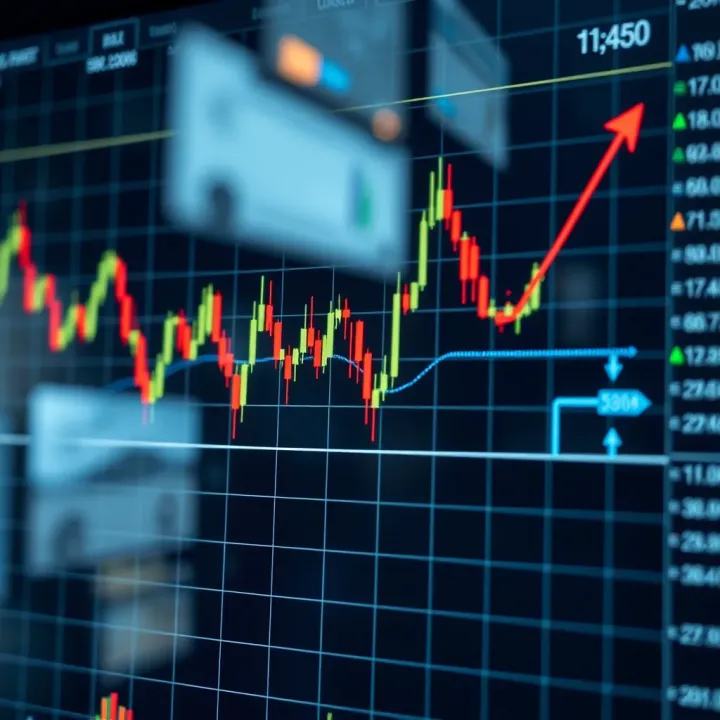
Currencies often don’t travel in a straight line—they bounce between support (a floor) and resistance (a ceiling). Identifying these areas is key for range traders. For instance, if the GBP/USD pair repeatedly reverses near 1.3800 resistance and 1.3600 support, traders know the price is contained within these bounds.
Support and resistance levels are visible on charts where historical price action paused or reversed. Spotting these zones allows traders to place buy orders near support and sell near resistance.
Once the price clearly moves within a range, traders can capitalize on this by buying low and selling high repeatedly. It’s like playing ping-pong with the market—catching the ball as it comes back within the range.
By using oscillators like the Stochastic or RSI fluctuating between extremes, traders can time entries and exits more precisely. For example, if RSI dips near 30 (oversold) near support level, that could be a buying opportunity.
This approach works best when the market is calm and volatility low, avoiding breakouts or huge surprises.
When the market gets quiet, ranges may tighten, making regular targets smaller. In such cases, narrowing stop losses and adjusting profit-taking levels help maintain a good risk-reward ratio.
A Nigerian trader may see this during the often dull mid-afternoon trading session when international markets are closed. Using tighter stops and watching for even small price bounces can keep trading active but safe.
Before a big move, prices often hover in a "consolidation" phase—a tight range with shrinking volume. For example, the USD/NGN pair might move sideways amid economic uncertainty before a sharp move triggered by new government policies.
Recognizing this phase involves watching for narrowing price bands and volume drops, often forming recognizable chart patterns like triangles or rectangles.
Not every breakout leads to a trend; confirmation reduces whipsaws. Traders wait for a candlestick close outside the consolidation zone, confirmed by increased volume.
For instance, a breakout above a resistance line on the EUR/USD with volume twice the average might indicate strong buying interest.
Using indicators like Average True Range (ATR) can help verify that volatility is picking up, reinforcing breakout strength.
False breakouts can trick traders into losing money. The trick is to wait for secondary confirmation, such as a retest of the breakout level acting as new support or resistance.
Using tight stop loss orders can limit damage when price snaps back inside the previous range. For example, if USD/JPY breaks above resistance but closes back below it in the next hour, an experienced trader would exit quickly.
Being ready to jump out or switch to range trading during false breakouts keeps losses small and preserves capital.
Successful forex trading isn't about finding a holy grail setup but understanding and applying strategies that match your style and market conditions. Combining trend following, range trading, and breakout approaches lets you adapt swiftly and trade smarter across Nigeria's dynamic currency markets.
Technical tools are a trader's compass in the chaotic world of forex, offering clear signals amid the noise. These tools help spot trends, confirm signals, and track momentum, giving traders an edge. Without them, it’s easy to second-guess decisions or jump into trades blindly.
Applying the right technical tools can make a world of difference, especially in a market as fast-moving as forex. They’re not standalone systems but work best when combined with a solid strategy and risk management plan. For instance, a Nigerian trader might use indicators to understand how local economic shifts, like changes in oil prices or the Naira’s stability, are reflected in currency pairs such as USD/NGN.
RSI is a momentum oscillator that ranges from 0 to 100, showing if a currency pair is overbought or oversold. When RSI crosses above 70, it hints that price might be due for a pullback; below 30, the currency may be undervalued and ready for a bounce. For example, if EUR/USD hits RSI 75 and you see signs of reversal, that might be your cue to consider selling or tightening stops. RSI works best when combined with other signals to avoid false alarms.
MACD is a trend-following indicator that captures changes in momentum by comparing two exponential moving averages (EMAs). Traders watch for the MACD line crossing the signal line – a crossover above indicates buying strength, below shows selling pressure. In practical terms, if USD/JPY's MACD crosses above its signal line, it suggests a possible upswing, guiding entry decisions. It's valuable for spotting early trend shifts, especially when markets are choppy.
These bands measure volatility by placing upper and lower boundaries around a moving average. When price touches or breaks the bands, it can signal overextension or potential reversal. For example, if GBP/USD pushes outside the upper Bollinger Band after a strong rally, traders might prepare for a pullback or consolidation. Bollinger Bands also help in identifying squeeze patterns where volatility contracts, hinting at an imminent breakout.
This pattern signals a market reversal and consists of three peaks: a higher middle peak (head) flanked by two lower peaks (shoulders). Spotting this in USD/NGN after a rally suggests the uptrend may be ending, and a downtrend is on the horizon. The neckline—drawn along the lows of the shoulders—is the key level: a break below it confirms the signal. It’s one of the more reliable reversal setups.
Double tops show a pair of peaks at roughly the same price level, indicating resistance, while double bottoms show two troughs, indicating support. For instance, if EUR/GBP forms a double top around a key level and fails to break through, it signals a potential trend reversal downwards. Conversely, a double bottom warns of a likely bounce up. These patterns work well with volume data—for confirmation, look for volume dropping on the second peak or trough.
Triangles (symmetrical, ascending, or descending) and flags represent periods of consolidation before price breaks out. Imagine an ascending triangle in USD/CAD formed by a rising support line and horizontal resistance; a breakout above resistance often triggers strong moves. Flags are short-term patterns resembling small rectangles or parallelograms slanting against the prevailing trend, signaling a brief pause before continuation. For traders, spotting these helps anticipate when volatility is about to spike.
Remember, no single tool or pattern guarantees success. The goal is to blend indicators and patterns with a clear trading plan, keeping an eye on the bigger market picture and your personal risk limits. With practice, technical tools become invaluable for executing strategies consistently and confidently.
Fundamental analysis plays a vital role in forex trading, especially if you're aiming to make decisions based on more than just price charts. This approach involves analyzing economic indicators, government policies, and other financial factors that influence currency values. For Nigerian traders, understanding these elements helps anticipate market movements driven by real-world events rather than just technical signals.
By combining fundamental analysis with your trading strategies, you can get a fuller picture of market conditions. This means you’re not just guessing based on historic price patterns but factoring in economic health, geopolitical tensions, or shifts in policy that affect currencies directly.
Interest rates are among the most important factors impacting forex markets. Central banks like the Federal Reserve (US) or the Central Bank of Nigeria (CBN) set interest rates that influence borrowing costs, consumer spending, and investment. When a central bank hikes rates, its currency often strengthens because higher returns attract foreign investors seeking better yields.
For example, if the CBN raises the policy rate, the Nigerian Naira might gain some strength as investors expect better returns on Naira-denominated assets. Traders should watch announcements from central banks closely since unexpected decisions can trigger sharp price moves.
Inflation measures how fast prices of goods and services rise. High inflation tends to erode a currency’s value since purchasing power drops. Conversely, low or stable inflation supports currency strength. GDP data tells you how fast a country’s economy is growing — stronger growth often boosts currency demand because businesses and investors expect profitability to increase.
To be practical, if Nigeria’s inflation figures come in higher than expected, it might signal the Naira could weaken because central banks could lose control over price stability. On the other hand, strong GDP growth usually encourages more foreign direct investment, pushing the currency upward. Keeping an eye on these numbers helps traders position appropriately ahead of big moves.
Employment data, like the US Nonfarm Payrolls or Nigeria’s equivalent employment statistics, give insight into economic health. If employment rises, consumers have more spending power and confidence, which can strengthen the country’s currency. Weak job numbers can indicate economic trouble ahead.
For forex traders, an unexpectedly high job creation report in the US often means a stronger USD. Similarly, improving employment in Nigeria may support the Naira. Watching these releases allows traders to anticipate volatility and plan entries or exits accordingly.
Scheduled releases such as central bank meetings, inflation reports, or trade balance data are well-known drivers of forex volatility. Traders often plan ahead around these events, using the information to anticipate possible market reactions.
For instance, a trader might avoid opening large positions before a scheduled CBN policy announcement to prevent unexpected losses from a surprise rate change. Alternatively, they may capitalize on volatility after the release to catch breakout moves.
Markets sometimes respond violently to emergencies — think unexpected political announcements, natural disasters, or sudden economic sanctions. These surprises cause spikes or crashes in currencies as traders rush to adjust positions.
This unpredictable nature means having stop losses and risk controls in place is crucial. Nigerian traders should stay alert to local and international news that can suddenly ripple into forex markets.
An economic calendar is a trader’s best buddy. It lists upcoming scheduled news events and their expected impact. By consulting it regularly, traders avoid being caught off guard and can better time their trades.
For example, seeing that US employment data is due tomorrow might encourage a trader to close positions or tighten stops today. This simple tool helps control risk and makes fundamental analysis more actionable.
Tip: Always double-check the time zone of your economic calendar to avoid missing critical updates, especially when trading international pairs involving the Naira.
Incorporating fundamental analysis doesn’t mean you ignore technical signals. Instead, think of it as adding another layer to your understanding — giving you an edge to spot real market-moving events and trade smarter in the Nigerian forex scene.
Forex trading isn't just about charts and numbers; it's just as much about mastering your own mind. Without a strong psychological foundation, even the best strategies can falter. Traders often overlook that managing emotions, maintaining discipline, and sticking to a plan can separate winners from the crowd. Psychology impacts every single decision you make, from when you enter a trade to when you decide to cut losses. Ignoring this aspect is like driving blindfolded—you might get somewhere, but chances are you'll crash.
Fear and greed management is a tightrope walk for many traders. Fear can make you hesitate, causing missed opportunities or premature exits, while greed tempts you to hold onto trades too long, risking bigger losses. For instance, with the Naira's sometimes shaky stability, a fear-driven trader might pull out early during volatility, missing out on eventual gains when the market smooths out. It's critical to recognize these feelings and label them without letting them dictate your moves.
One practical tip is to set predefined stop-loss orders. This way, fear or greed won’t lure you into moving the stop loss further away to “wait it out.” Instead, it locks in your risk and keeps emotions at bay.
Avoiding impulsive decisions comes down to having a clear plan and sticking to it. Picture a trader who suddenly jumps into a trade after hearing a buzz about an oil price shift without analyzing the full impact on the Naira or related currency pairs. Those knee-jerk moves often lead to losses. Creating trade rules—like always confirming signals across multiple timeframes or waiting for a candle close—can curb these impulse trades.
To build this habit, keep a trading journal. Before placing a trade, jot down your reasons. This simple act forces you to think through the decision instead of acting on a whim.
Developing patience and discipline ties the previous points together. Patience means waiting for the right setups rather than chasing the market; discipline means following your plan even if things get rough. If you find yourself double-checking every candle or tweaking your system after two losses, you're letting impatience and lack of discipline creep in. Over time, this chip away at your capital.
An example would be a trader sticking to their moving average crossover strategy, even during a sideways market, without rashly jumping into trades hoping to catch random spikes. Building this mindset often takes practice but pays off in consistent performance.
Adopting daily preparation habits is key for a clear mind and ready strategy. This involves reviewing major economic events in the Nigerian market, such as Central Bank of Nigeria announcements or oil price updates, before market open. Sketch out your trading plans, adjust stops, and confirm your setups early so you’re not making decisions on the fly.
A typical routine might include reviewing your chart setups, checking an economic calendar for news releases affecting the Naira, and scanning your open positions for any adjustments.
Post-trade analysis is a powerful step many neglect. After closing trades, take time to review what went right and what didn’t. Did you follow your plan? Were emotions involved? Perhaps the trade failed because you jumped in without confirmation? Record these observations. Over time, analyzing your mistakes and successes helps sharpen your edge.
Write down answers to questions like:
What was my entry and exit rationale?
Did I respect my stop loss?
Was I influenced by recent news or social media hype?
Lastly, maintaining focus over time is a challenge but vital for ongoing success. The forex market is always on the move and distractions are everywhere. Nigerian traders, especially those juggling other jobs or businesses, must carve out calm, quiet periods dedicated purely to trading. This improves decision-making and avoids careless mistakes.
Techniques to maintain focus include:
Setting specific trading hours and sticking to them
Minimizing social media and unrelated interruptions
Using tools like focus timers to stay on task
Remember, trading consistently is less about hitting the jackpot on one trade and more about steady, well-thought-out decisions backed by strong psychology and routine.
In short, controlling your mind and creating a reliable routine will help you navigate the ups and downs of forex trading with steadiness and confidence. It’s the backbone of turning strategy into sustainable profits.
Forex trading in Nigeria requires a tailored approach given the country's unique economic conditions and regulatory landscape. Adjusting your trading strategies to fit this context is vital for consistent success. Without considering local factors like the naira’s volatility, oil price swings, and government policies, a generic trading plan might fall flat or even lead to losses. This section highlights how adapting your approach can help you navigate the Nigerian forex scene more effectively.
The Nigerian naira doesn’t always behave like the major currencies you see on global forex charts. Its value often swings due to external pressures like foreign exchange reserves, import demands, and political events. Traders in Nigeria should keep a close watch on the naira’s stability because a sudden depreciation can wipe out profits or increase risk dramatically.
For example, during times when the Central Bank of Nigeria (CBN) imposes restrictions on dollar access, the naira tends to weaken in parallel markets. Understanding this can guide you to adjust your position sizes or even switch to currencies less affected by these distortions. By factoring in naira’s behavior, you can better time your entries and exits or decide when to avoid high-risk periods altogether.
Nigeria’s economy leans heavily on oil exports, making the naira sensitive to global oil price moves. When oil prices dive, the naira usually weakens because national revenue drops, leading to less foreign currency inflow. Traders who trade pairs involving the naira or Nigerian financial instruments should consider oil price trends as an indirect indicator.
Say the price of crude oil tumbles due to OPEC decisions or geopolitical tensions; this is often a cue that the naira could face downward pressure. Being aware of such connections allows traders to hedge their positions or look for swing opportunities aligned with oil market movements.
Government regulations can alter the forex landscape overnight. The Nigerian government and CBN frequently update policies on currency controls, import restrictions, and foreign exchange procedures. These moves can impact liquidity, spread costs, and the overall ease of trading.
One practical tip is to stay updated on policy announcements and incorporate them into your trading calendar. For instance, when the government implements forex restrictions to manage reserves, it could cause sharp moves or slower market reactions. Adapting your strategy around these events—perhaps by reducing leverage or avoiding trading during uncertainty—can protect your capital.
A trustworthy broker is a must, and in Nigeria, the Securities and Exchange Commission (SEC) is the key regulator. Trading with brokers registered under Nigerian authorities guarantees some level of oversight, reducing the risk of scams or unfair practices.
Before committing, check if your broker adheres to Nigerian rules, including transparent operations and protection of client funds. Using an unregulated broker might seem tempting due to lower spreads or flashy offers, but it's a gamble that can backfire fast.
Not all platforms are created equal, especially for Nigerian traders who may face challenges such as internet stability or payment options. Look for platforms that offer low latency, reliable order execution, and local payment methods like bank transfers or USSD services.
Platforms such as MetaTrader 4 and 5 remain popular for their robustness and wide range of tools, but also consider brokers offering well-optimized web platforms and mobile apps that handle spotty connections gracefully. Demo testing platforms before live trading helps identify which interface suits your style best.
Forex trading quickly becomes frustrating if you’re stuck and can’t get help. Efficient customer support can make a huge difference, especially when dealing with issues like withdrawal delays or technical glitches.
Pick brokers with responsive support teams who understand the Nigerian market, ideally offering multiple channels—phone, email, live chat—and support in English and local languages if possible. Real-world reports from other Nigerian traders can clue you into who’s reliable.
"Choosing the right broker and adapting your strategy to Nigeria’s economic quirks isn't just smart — it's essential to keep trading consistent and profitable."
Adjusting your forex approach to the Nigerian market, including understanding the naira’s quirks, oil price impacts, government interventions, and broker reliability, sets you up for steadier returns and fewer surprises. These local insights refine the broader strategies into something that actually clicks with the Nigerian trading environment.
Explore effective forex trading strategies tailored for Nigerian traders 🇳🇬. Learn risk management, analysis methods, and how to adapt plans for local markets 📈💼.
💹 Explore forex trading designed for Nigerians! Learn key concepts, spot risks, and get practical tips to trade currencies confidently and smartly.
Explore forex trading in Nigeria 🇳🇬 with tips on brokers, strategies, risks, regulations, and market opportunities to trade smarter and safer 💹
Discover how Nigerian investors can benefit from forex trading 💹 including high liquidity, easy access, and diversification 🌍 while managing risks effectively.
Based on 6 reviews