
Top Forex Trading Apps for Beginners in Nigeria
Discover the best forex trading apps for beginners in Nigeria 🇳🇬. Learn about app features, ease of use, security & trading tips for smart investing 📱💰.
Edited By
James Whitaker
Forex trading has become accessible to many, especially with the rise of mobile apps tailored for beginners. If you're in Nigeria and looking to explore forex trading, understanding the basics and choosing the right app is essential before risking your hard-earned naira.
Forex, simply put, involves buying and selling currencies to profit from fluctuations in exchange rates. Unlike the stock market, forex operates 24 hours on weekdays, which suits the busy schedules of many professionals and students. However, the volatility means caution is key.

When starting out, selecting a trustworthy app is a major step. An ideal app should have a clear, user-friendly interface, allowing you to monitor price movements and place trades without hassle. For instance, popular apps like MT4, MT5, and local favourites like Pocket Forex provide useful charting tools and support local payment options.
Security is non-negotiable. Always verify that the app is regulated by recognised bodies and uses encryption to protect your data and funds. Apps that require your Bank Verification Number (BVN) and align with Central Bank of Nigeria (CBN) guidelines add a layer of safety.
Consider the costs involved too. Look out for hidden fees from spreads, withdrawal charges, or inactivity. Some apps offer demo accounts, letting you practise without real money—a smart move before trading with actual funds.
Starting with a demo account and small trades helps limit losses while you learn. Never rush into large positions before mastering the basics.
Additionally, an app that provides educational resources or real-time news updates can enhance your trading decisions. In Nigeria’s dynamic forex scene, staying informed about global events and local economic shifts is vital.
Lastly, support matters. Having access to responsive customer service can save you stress when technical issues or trading questions arise.
In summary, as a beginner in Nigeria’s forex market, prioritise security, ease of use, costs, educational features, and reliable support when choosing your trading app. This foundation will help you trade confidently and protect your capital.
Grasping the basics of forex trading is vital before you dive into using trading apps. Knowing how the forex market operates helps you make better decisions and avoid common mistakes that many beginners fall into. This section breaks down the core concepts to give you a solid foundation.
Forex trading, or foreign exchange trading, involves buying one currency while simultaneously selling another. The goal is to profit from changes in exchange rates between two currencies. For example, if you expect the US dollar (USD) to strengthen against the Nigerian naira (₦), you might buy USD/NGN with the hope of selling it later at a higher rate. Unlike stock markets, forex operates 24 hours daily during the week, reflecting the global nature of currencies.
Forex trading happens over a network of banks, brokers, and traders who buy and sell currency pairs. You'll mostly interact through a trading app that acts as your gateway to this market. The prices change quickly, driven by factors such as economic data, geopolitical events, and market sentiment. For newbies, focus on major pairs like EUR/USD or USD/NGN because they typically have better liquidity and tighter spreads, which means lower trading costs.
Remember, forex trading is not about luck but understanding market movements and timing your trades well.
Currency Pair: This shows the two currencies you are trading, e.g., GBP/USD. The first is the base currency, and the second is the quote currency.
Pip: The smallest price movement in a currency pair, usually the fourth decimal place. It determines your profit or loss.
Spread: The difference between the buying (ask) and selling (bid) price. Brokers earn from this gap.
Leverage: Allows you to control a large position with a small amount of money, but it increases risk.
Lot: The size of the trade. A standard lot is 100,000 units of the base currency.
Understanding these terms helps you follow market news and use your trading app more effectively. For instance, knowing how leverage works can save you from taking dangerous risks with your funds.
Having a clear grasp of these basics means you will be better prepared to choose the right app, place trades confidently, and manage risks wisely as you begin your forex trading journey.
Selecting the right forex trading app is the foundation for a smooth and profitable trading experience. With many apps out there, each claiming to be the best, picking one without knowing key factors can lead to frustration and losses. The right app must match your trading goals, offer a user-friendly interface, and provide the security needed, especially when dealing with real money. For instance, if you plan to trade frequently on the go, an app with fast execution speeds and stable uptime is crucial.
A good forex trading app should have certain features that make trading simpler and more reliable. Real-time price charts with various timeframes help traders track market trends effectively. Tools for technical analysis, such as moving averages, RSI, and trend lines, are important for making informed decisions. Additionally, the app should support multiple order types like stop-loss and take-profit to control risk. Push notifications are also valuable, alerting you to market events or price changes without constantly checking the app.
For example, MetaTrader 4 (MT4) and MetaTrader 5 (MT5) offer a wide range of analysis tools and indicators, making them popular choices among Nigerians. Besides these, demo accounts are essential for beginners to practise without risking real money.
Security is a non-negotiable factor when selecting a forex trading app. The app must encrypt user data and transactions to prevent cyber attacks. Look for apps that are regulated by reputable bodies like the Nigerian Securities and Exchange Commission (SEC) or international regulators such as the Financial Conduct Authority (FCA) or Cyprus Securities and Exchange Commission (CySEC). Regulation brings some assurance the broker follows proper standards.
Also, confirm that the app uses two-factor authentication (2FA) to add a layer of protection during login. Nigerian traders should prefer brokers accepting local payment methods that comply with Central Bank of Nigeria (CBN) guidelines, avoiding apps that require complicated international wire transfers or expose users to exchange rate risks unnecessarily.
Never compromise on security. It's better to trade with a slightly limited app you trust than risk a flashy one with doubtful credentials.
Trading costs directly affect profitability, so understanding the fee structure before committing is vital. Some apps offer zero commission but make money on wider spreads (difference between buy and sell prices). Others charge explicit commissions but offer tighter spreads. For example, brokers connected to MT4 often provide variable spreads, which can widen during volatile periods.
Additionally, check for hidden fees like withdrawal charges or inactivity costs. App usability also matters — an intuitive layout reduces errors and speeds up trade execution. Nigerian traders using apps like OANDA or ThinkMarkets often praise their clear interfaces and fast execution.
In summary, look for an app with transparent fees, a straightforward user interface, and the ability to customise your trading environment. That way, you spend less time navigating and more time making smart trades.
Starting forex trading with the right app is more than just downloading and opening it. Setting up your account properly ensures you trade smoothly, avoid common pitfalls, and protect your funds from fraud. The process includes registering your account, verifying your identity, funding the account, and finally placing your first trade. Each step requires attention to detail to prevent delays or complications.
Registering an account on a forex trading app requires entering your personal information accurately. You will typically provide your full name, email, phone number, and sometimes your Bank Verification Number (BVN) for Nigerian users. This ensures compliance with Know Your Customer (KYC) regulations, a legal requirement to prevent money laundering.
Verification usually involves uploading a government-issued ID like a National Identification Number (NIN) card or driver's licence, plus proof of address such as a recent utility bill or bank statement. For instance, if you use the MT4 app, its broker might require these documents before allowing you to trade. Delaying or skipping verification can stop withdrawals later, so it pays to handle it as soon as you register.
After verification, the next step is funding your forex account. Trusted apps support multiple payment channels, including local bank transfers, USSD payments, or mobile money wallets like OPay. For example, you might transfer ₦20,000 to your trading account via your bank’s mobile app within minutes.
Withdrawals work similarly but always check the minimum withdrawal limit and the processing time. Some apps take 24 to 72 hours, while others process withdrawals within the same day. Incorrect bank details or failure to complete verification can block withdrawals, so double-check all information.
Always start with a small amount to test deposits and withdrawals. This practice helps avoid frustrations and ensures you understand the app’s transaction routines before investing bigger sums.
Once your account is funded, placing your first trade is straightforward but requires focus. Here’s a simple process:
Select the currency pair: Common pairs include USD/NGN or EUR/USD. These pairs show how much one currency is worth in terms of the other.
Choose trade size: Decide the amount you want to invest. Beginners should start small, maybe ₦5,000 or ₦10,000.
Set trade direction: Buy if you expect the currency value to rise or sell if you expect it to fall.
Use stop-loss and take-profit orders: These limit losses and lock in profits automatically. For example, if you buy USD/NGN at ₦450, you might place a stop-loss at ₦440 to prevent excessive loss.
Confirm and place the trade: Review all details carefully before confirming.
Starting with a clear plan and understanding the app’s interface prevents costly mistakes early on.
Getting acquainted with these steps prepares you not just to trade but also to begin managing risks effectively. Take advantage of demo accounts many apps offer to try trades without real money until you feel confident.
By taking these practical steps seriously, you set a solid foundation for your forex trading journey using mobile apps in Nigeria.
Forex trading offers good opportunities, but it comes with risks that can wipe out your money quickly if you're not careful. Knowing these risks and how to manage them helps you keep control and trade more confidently. This is especially true in Nigeria, where forex trading is growing fast, but scams and market volatility are real issues.
One main risk is market volatility. Forex prices can shift dramatically within minutes due to global events, central bank decisions, or breaking news. For example, a sudden announcement by the Central Bank of Nigeria (CBN) on the naira exchange rate can cause steep price swings. Leverage is another risk — many apps offer high leverage, sometimes up to 1:500, which magnifies both profits and losses. If you trade with high leverage without discipline, a small move against you could wipe out your investment.
Liquidity risk also matters. While major currency pairs like USD/EUR are highly liquid, some pairs involving African currencies may not be, leading to difficulty entering and exiting trades at favourable prices. Lastly, technology risks such as app glitches, delayed orders, or poor internet connections can affect trading outcomes. With our spotty internet infrastructure, this is a real concern.
Start with small trade sizes and avoid maxing out your leverage. Use stop-loss orders to automatically close trades when losses hit a set amount, keeping risk manageable. For example, if you have ₦50,000 in your account, placing a stop-loss at 2% means you lose no more than ₦1,000 per trade.
Diversify your trades instead of putting all your funds into one currency pair. That way, a bad move on one won't sink your entire portfolio. Keep a trading journal to track decisions and outcomes. This helps you learn patterns and improve your strategy.
Using demo accounts can sharpen skills without risking real money. Before trading live, practise with virtual funds on platforms like MT4 or MT5, which Nigerian traders commonly use.
Scams often lure traders with unrealistic promises of guaranteed profits or secret trading systems. If an app claims you will get consistent 20% monthly returns with little risk, be very suspicious. Also, beware of apps that pressure you to deposit large sums fast or impede withdrawals.
Always check if the forex platform is regulated by credible bodies. Look for licences from international authorities like the Financial Conduct Authority (FCA) or local regulators like the Securities and Exchange Commission (SEC) Nigeria. Never trade with unverified brokers advertised on social media or WhatsApp groups.
If you suspect fraud, stop trading immediately and report the platform to relevant authorities like SEC Nigeria or the Economic and Financial Crimes Commission (EFCC).
To sum up, understanding risks, managing them well, and spotting scams form the backbone of a secure trading journey. This foundation lets you navigate forex trading safely, especially when using mobile apps.
Many Nigerian traders rely on mobile apps to access the forex market because these platforms offer convenience, speed, and access to global currency pairs. Choosing the right app affects not just ease of trading but also how well you can manage your risks and execute strategies. For instance, features such as live price feeds, technical analysis tools, and quick order execution can make a real difference in trade outcomes. This section focuses on popular platforms widely used in Nigeria, highlighting what makes them fit for local traders.
MetaTrader 4 (MT4) and MetaTrader 5 (MT5) remain the gold standards for many Nigerian forex traders. MT4 is known for its simplicity and reliability, ideal for beginners getting to grips with forex charts and indicators. MT5 builds on that by offering more timeframes, an economic calendar, and advanced order types, suitable if you want more detailed market analysis.
Other notable platforms include cTrader and TradingView. cTrader provides a clean interface and advanced charting, favoured by traders interested in algorithmic trading. TradingView, while more of a charting and social trading platform, integrates with brokers and offers insight through community-shared ideas.
These platforms allow custom indicators and automated strategies, crucial for traders who want to backtest or employ trading bots. Plus, they support multiple devices, so you can switch from your laptop to your mobile with ease.
For Nigerian traders, having local payment options is a must. Apps that accept deposits and withdrawals through Nigerian banks or popular fintech platforms like Paystack or Flutterwave make funding hassle-free. PayPal usage is limited, so look for apps supporting bank transfers, card payments (your GTBank, Access Bank cards, etc.), or even Naira wallets.
Customer support should also cater to local needs with timely responses, possibly even Nigerian-based help desks. This reduces delays when you face technical issues or require account assistance. Platforms with active WhatsApp support or dedicated call lines stand out here.
Usability is about how easily you can navigate the app, find instruments, and make trades. MT4, while basic, has a straightforward layout, but sometimes lacks modern UI polish. MT5 improves on this with better design and additional tools. Apps like TradingView offer highly interactive charts but may require paying monthly fees for full features.
Costs also matter. Besides the spread or commission fees, check whether there are withdrawal charges or inactivity fees. Some apps offer zero commissions but compensate through wider spreads, which can eat into your profits. Nigerian traders should also check if the app accounts for naira fluctuations during conversions because this impacts your real cost.
Whether you're starting small or planning to scale, picking an app that balances usability, transparent costs, and strong local support helps you trade smarter and avoid unnecessary hassles.
In summary, MT4 and MT5 cater well to Nigerian traders through a mix of simplicity and advanced features. Paying attention to local payment integrations and customer care makes everyday trading easier, while comparing app interfaces and fee structures can save you money and time in the long run.
Trading forex on your mobile device offers flexibility but demands discipline and knowledge to succeed. To make the most of your trading app, you need practical strategies that go beyond simply buying and selling currencies. Here are some clear, actionable tips to help you stay on course and improve your chances of making solid gains.
Before risking real money, start with a demo account. These accounts simulate real trading environments without financial loss, letting you practice your skills and test strategies. For example, Kuda FX and MT4 provide demo options where you can try various currency pairs and learn how market orders work. Using a demo account repeatedly helps you understand platform features, timing for entry and exit, and how market events impact prices, all without stress. This groundwork is especially useful for beginners who want to avoid jumping in blind.
Markets respond quickly to economic news and global events, so staying informed is key. Real-time updates from reliable sources like Bloomberg, Reuters, or local outlets such as BusinessDay Nigeria keep you aware of factors influencing currency values, like Central Bank of Nigeria policies or oil price shifts. Use your trading app's news feed or mobile alerts to follow these developments. For instance, if the Naira weakens due to fuel subsidy adjustments, catching that news early gives you a chance to adjust your trades accordingly. Tracking both global and Nigerian economic news can help you anticipate currency movements and avoid surprises.
Trading forex should never upset your financial balance. Set a clear budget for how much you can afford to invest and potentially lose without causing hardship. Nigeria’s erratic power supply and exchange rate volatility mean unexpected costs, so your trading fund should be separate from essential expenses like rent or school fees. Use stop-loss orders offered by your mobile app to limit losses automatically, preventing emotional decisions during market swings. Also, avoid chasing losses by trading beyond your means. Regularly review your trades to learn what works and stick to your plan. Managing risk tightly is the backbone of long-term trading success.
Consistently practising with demo accounts, staying updated with relevant market news, and managing your finances strictly can transform forex trading from guesswork to a disciplined skill. Mobile apps give you convenience, but your success depends on how well you combine these practical approaches with the tools at your fingertips.
Mastering these tips puts you in a strong position to navigate forex trading confidently and sustainably, even with just a mobile phone.
Discover the best forex trading apps for beginners in Nigeria 🇳🇬. Learn about app features, ease of use, security & trading tips for smart investing 📱💰.
📱 Discover top trading apps for beginners in Nigeria! Learn key features, get safety tips, and choose the best platform to start trading today.
Explore top forex trading apps for Nigerians 📱. Learn key features, pros & cons, and tips to trade smartly while managing risks in volatile markets 💹.
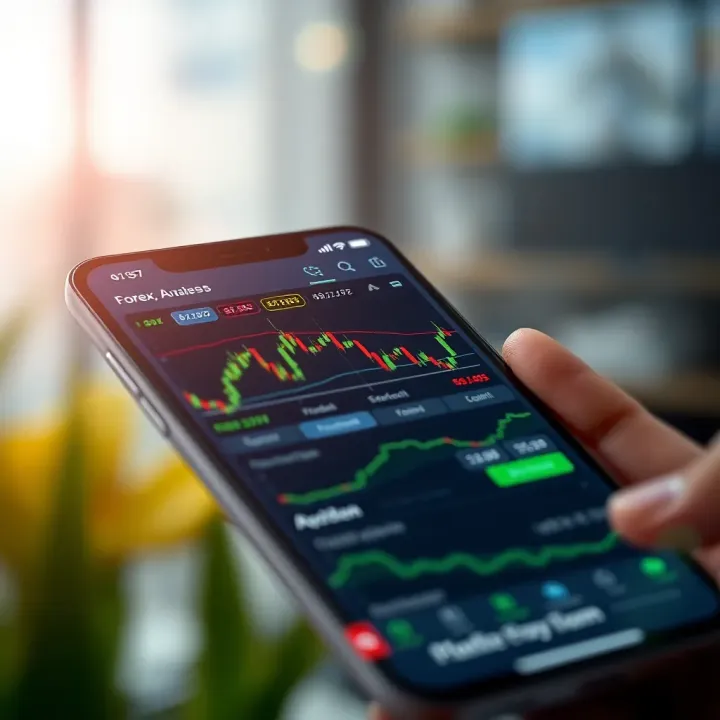
📱 Discover the best free forex trading apps for Nigerian traders. Learn essential features, popular platforms like MTN and Kuda support, plus tips for trading success locally.
Based on 7 reviews