

Effective Forex Trading Strategies for Nigerians
📈 Master forex trading in Nigeria with effective strategies: trend following, range trading, breakouts & savvy risk management for steady success.
Edited By
Amelia Clarke
Forex trading offers Nigerian traders a viable path to diversify income beyond traditional markets. However, succeeding requires more than just basic knowledge – it demands strategies tailored to Nigeria's unique economic and financial context.
Understanding Nigeria’s forex environment starts with recognising the naira’s volatility. Factors like fluctuating oil prices, CBN's foreign exchange policies, and fuel subsidy changes influence currency swings heavily. This creates trading opportunities but also risks, so effective strategies must incorporate strong risk management.
Local brokerage choice is another pivotal consideration. Nigerian traders should seek brokers regulated by the Securities and Exchange Commission (SEC) Nigeria, ensuring protection and compliance. Globally linked platforms like FXTM or Alpari, paired with local payment options like bank transfers or USSD payments, offer convenient fund access. However, traders must confirm the broker supports naira transactions to avoid costly currency conversions.
The article breaks down key strategies including trend following, technical and fundamental analysis, and trading psychology—each adapted to Nigeria's market peculiarities. For example, trend-following—identifying persistent price directions—works effectively when naira-driven economic news such as trade balance data or CBN policy announcements impact currency pairs like USD/NGN.
Risk management is non-negotiable here. Setting stop-loss limits amid episodes of naira price shocks helps prevent catastrophic losses. Also, leveraging position sizing to match personal capital safeguards against overexposure.
Successful Nigerian forex traders combine practical analysis tools with a grounded understanding of local economic factors, always protecting their capital against sudden currency moves.
This guide aims to provide Nigerian traders with straightforward, actionable approaches that improve decision-making and boost profitability while navigating the unique challenges of forex trading in Nigeria.
Grasping the core concepts of forex trading forms the bedrock for success, especially for Nigerian traders dealing with a unique market environment. Without a clear understanding of what forex trading truly involves, the risks multiply, and profitable opportunities often slip away unnoticed. This section breaks down essential ideas like how currency pairs function, the role of leverage, the profiles of market participants, and the significance of trading sessions.
Forex trading revolves around buying one currency and selling another simultaneously, which is why currencies are always quoted in pairs—for example, USD/NGN or EUR/USD. The exchange rate shows how much of the second currency you need to buy one unit of the first. For a Nigerian trader, understanding the USD/NGN pair is crucial since the naira’s value influences import costs, inflation, and personal savings.
Consider this: if the USD/NGN rate moves from ₦460 to ₦470, it means buying US dollars now costs more naira. Recognising these fluctuations helps traders decide whether to hold on or sell, balancing profit potential with local economic realities.
Leverage allows traders to control larger positions with a relatively small amount of capital. For instance, with 1:100 leverage, ₦10,000 controls ₦1,000,000 of currency. While this magnifies profits, it increases losses too, so understanding margin—the deposit needed to open and maintain a position—is vital.
In Nigeria, where starting capital can be tight, many jump at high leverage offers from brokers, but this can be a double-edged sword. Novice traders must weigh the temptation of bigger returns against the risk of wiping out their funds, always practicing tight risk management.
The forex market hosts a wide array of players: central banks, commercial banks, multinational companies, hedge funds, retail traders, and even speculators. Each participant has distinct motives — central banks might intervene to stabilise their currency, while companies trade to hedge foreign currency exposure.
For Nigerian traders, retail participation is growing through platforms like MTN Momo and OPay. Understanding why others trade helps you anticipate market moves. For example, if the Central Bank of Nigeria adjusts policy rates, it often causes sharp naira movements impacting forex trades.
Forex operates 24/5 across global markets in London, New York, Tokyo, and Sydney. Overlaps between sessions, like London and New York, typically bring higher liquidity and volatility, offering more trading chances.
For Nigerians, trading during London or New York sessions aligns with local daytime or early evening hours, making it practical to catch major market moves. Knowing these sessions helps plan trades better, avoid low-liquidity periods, and balance forex activity with daily routines.
Clear understanding of these fundamentals sharpens decision-making and helps Nigerian traders navigate the complex forex waters with more confidence and control.
Understanding popular forex trading strategies is vital for Nigerian traders aiming to navigate the volatile currency market with confidence and precision. These strategies offer structured approaches that help traders make informed decisions, manage risks effectively, and boost their chances of consistent profit. By applying time-tested methods, traders can better adapt to market swings, especially considering the unique fluctuations of the naira.
Identifying and capitalising on market trends involves recognising the general direction in which currency prices move over a certain period. For Nigerian traders, spotting trends early allows the use of correct entry and exit points, especially during periods of naira instability caused by economic reports or political events. For example, if the naira weakens steadily against the dollar, a trader following the trend might enter sell positions early to benefit from the downward momentum.
Trend trading relies heavily on patience and discipline because trends can last from days to weeks. Chasing after rapid price swings without clear trend confirmation often leads to losses. Hence, Nigerian traders should focus on daily or 4-hour charts to filter out noise and reliably track the trend.
Tools and indicators used for trend analysis include moving averages, the Moving Average Convergence Divergence (MACD), and the Relative Strength Index (RSI). Moving averages smooth out price data, making it easier to see long-term trends. For instance, a 50-day moving average crossing above the 200-day average often signals a new uptrend. Nigerian traders can use this crossover to confirm entry points.
MACD helps identify trend changes by showing the relationship between two moving averages. When the MACD line crosses above the signal line, it suggests upward momentum — a useful cue for entering long positions in forex pairs like USD/NGN. RSI measures overbought or oversold conditions, enabling traders to avoid entering trades against the prevailing trend.
Combining these indicators improves reliability. For example, when both MACD and moving averages signal an uptrend, it reduces guesswork and sharpens trading decisions.
Trading within price ranges means operating when the market moves sideways between established support and resistance levels. Nigerian traders might use range trading during periods of naira stability when prices oscillate without clear upward or downward bias.
Inside this range, traders buy near support and sell near resistance, capitalising on price bounce-backs. Reliable execution depends on spotting these levels precisely and avoiding trades when the price edges near a breakout zone. For instance, if USD/NGN trades between ₦410 and ₦420 for several days, entering buy orders near ₦410 can be profitable with a tight stop loss.
Recognising and trading breakouts involves identifying moments when price moves beyond a range, signalling a possible strong trend. Breakouts often come with increased volume and volatility. Nigerian traders closely watching global economic announcements or CBN interventions may spot breakout opportunities in currency pairs like GBP/USD or EUR/USD that can indirectly affect naira valuation.
The key is to confirm breakout validity; false breakouts can lead to losses if the price quickly reverses. Waiting for a candle close outside the range or using volume spikes helps confirm the breakout. Once confirmed, traders can enter in the breakout direction, placing stop losses just inside the prior range to limit risk.
Successful trading combines understanding these strategies with strict risk management and adapting to local market quirks such as naira fluctuations and internet reliability. Using trend following or range trading techniques tailored to current market conditions can offer Nigerian traders a practical edge to improve their forex results.
In forex trading, combining technical and fundamental analysis equips traders with a fuller picture of market movements. Technical analysis focuses on price patterns and indicators to forecast future trends, while fundamental analysis examines economic data, geopolitical events, and news to assess currency value. Nigerian traders who rely solely on one approach miss out on the benefits of a more balanced perspective. For example, technical indicators might show a bullish trend in USD/NGN, but sudden changes in Nigeria's monetary policy can alter that direction sharply.
Among popular indicators, moving averages and the Relative Strength Index (RSI) stand out for their usability and relevance. Moving averages help smooth out price data, revealing the overall trend over a set period. A short-term moving average crossing above a long-term average might signal a buying opportunity. RSI measures the speed and change of price movements, identifying overbought or oversold conditions. For Nigerian traders, these tools help spot entry and exit points without needing to assess economic news immediately.
However, relying on a single indicator can be misleading, especially in volatile pairs like USD/NGN or GBP/USD. Combining indicators often improves reliability. For instance, using moving averages alongside RSI can confirm a trade signal—when both suggest an upward move, the chance of success is higher. This combination reduces false alarms and supports better timing, which is crucial when market swings are sharp due to factors like fuel scarcity or political announcements.
Global economic data such as US Non-Farm Payrolls, European Central Bank decisions, or China's manufacturing output significantly influence currency prices. For example, a stronger-than-expected US employment report often strengthens the dollar against other currencies. Nigerian traders who track these events can anticipate market shifts, managing trades to avoid abrupt losses or to seize profit opportunities.
On top of global news, monitoring Nigerian economic indicators is indispensable. Data on inflation rates, Gross Domestic Product (GDP) growth, and Central Bank of Nigeria (CBN) policies directly impact the naira. For example, when inflation data shows rising prices, the naira may weaken, affecting currency pairs like USD/NGN and EUR/NGN. Traders aware of these changes can adjust positions accordingly or avoid risky trades during uncertain periods caused by, say, fuel subsidy adjustments or power supply issues.
Combining technical tools with a firm grasp of economic events helps Nigerian traders navigate forex markets with confidence and precision.
Integrating both technical indicators and awareness of economic releases balances short-term market movements with longer-term trends. This practical outlook allows traders in Nigeria to adapt quickly, safeguarding capital while identifying opportunities suited to local and global market realities.
Mastering risk management and maintaining the right trading mindset are essential skills for any forex trader, especially in Nigeria’s unpredictable market environment. These areas help protect your capital while keeping you focused and disciplined in the face of volatility. Without managing risk effectively, even the best strategies cannot save your portfolio from significant losses. Additionally, poor emotional control often leads to impulsive decisions that erode profits.
Setting stop losses and take profit levels is the foundation of risk control. A stop loss automatically closes your trade when the price hits a certain unfavourable level, limiting possible losses. For instance, if you buy USD/NGN at ₦460 and place a stop loss at ₦455, your position will close if the price drops ₅ naira, preventing a deeper loss. Similarly, a take profit order exits the trade when your target price is reached, locking in gains. Nigerian traders often overlook this, holding losing trades hoping for reversals, which drains funds. Properly using stop losses and take profits helps ensure your losses are controlled and profits are captured at planned levels.
Position sizing and capital allocation ensure you never risk too much on a single trade. For example, risking 2% of your trading capital per trade means that even a losing run won’t wipe you out. If your total capital is ₦200,000, you risk just ₦4,000 per trade. Many Nigerian traders make the mistake of going “all in” on one trade, often due to excitement or frustration. Solid position sizing also helps you spread risk across different currency pairs, so you don’t suffer severe losses from one bad bet. Start small, grow consistently.
Avoiding impulsive trades is crucial. Jumping on every hot tip or news headline without analysis can lead you to lose control. Resist temptation to react to every price swing, especially given the naira's fluctuations caused by government policies or global events. Stick to your trading plan and wait for clear signals based on your strategy. This reduces emotional trading, which often ends badly. For example, rather than chasing a sudden spike, wait for confirmation that the trend is sustainable.
Handling losses and staying consistent is a test of a trader’s character. Losses are inevitable in forex, even for professionals. The trick is not to let them shake your confidence or push you into revenge trading — trying to recover losses quickly. Nigerian traders who panic sell or double down after losses usually compound the damage. Instead, keep a trading journal, review your trades objectively, and focus on long-term gains. Consistency in approach, combined with solid risk management, builds wealth steadily over time.
Managing risk and controlling emotions are not separate from your trading strategy — they are what make your plans work in the real market, especially with naira’s volatility and electricity challenges in Nigeria. Skipping these steps is like driving a danfo without brakes.
With these practices in place, you protect your capital and prepare yourself mentally to face forex’s ups and downs calmly and rationally.
Nigerian forex traders face unique challenges and opportunities that require modifying global trading strategies to fit local realities. Without adjustment, approaches proven elsewhere might not yield the desired results here. Tailoring your trading plan to accommodate factors like naira volatility, infrastructural issues, and broker reliability can significantly improve outcomes.
The Nigerian naira has experienced wide swings in recent years, influenced by government policies, oil price shocks, and foreign exchange supply constraints. These fluctuations affect forex traders directly, as sudden naira depreciation or appreciation alters the profitability of trades. For example, a trader holding positions in USD/NGN must monitor official and parallel market rates, since discrepancies affect both entry and exit points. Such volatility demands flexible risk management strategies, including tighter stop losses and dynamic position sizing tailored to market sentiment.
Power supply and internet connectivity remain persistent challenges for Nigerian traders. Frequent outages and slow connection speeds can disrupt access to trading platforms, causing missed trades or delayed order executions. A trader relying local power supply may find it hard to stay connected during critical market hours. Many resort to backup generators or uninterrupted power supply (UPS) systems. Likewise, selecting internet providers with more stable connections and having mobile data as fallback can ensure continuity. Traders should also consider trading during periods when power supply is relatively stable or outside of peak national consumption times.
Choosing a reputable broker regulated by recognised authorities ensures a safer trading environment. Nigerian traders should prioritise brokers registered with the Securities and Exchange Commission (SEC) Nigeria or licensed internationally by bodies like the Financial Conduct Authority (FCA). This reduces risks of fraudulent practices or withdrawal complications. Checking reviews and feedback from other Nigerian traders can help identify trustworthy options.
Popular trading platforms among Nigerian forex traders include MetaTrader 4 (MT4), MetaTrader 5 (MT5), and cTrader. These platforms offer user-friendly interfaces, a range of technical indicators, and reliable execution speed. Additionally, localised platforms or brokers offering naira-denominated accounts simplify deposit and withdrawal processes and reduce conversion costs. Platforms that integrate with mobile devices are also essential since many Nigerian traders rely on smartphones. Ultimately, a good platform should balance security, ease of use, and accessibility.
Adapting your forex strategies to Nigeria’s market conditions is not optional—it’s a necessity. Recognising local nuances like naira volatility and infrastructural challenges empowers you to trade more effectively and minimise avoidable losses.
Naira volatility requires flexible risk management.
Constant power and internet issues demand preparedness.
Regulated, trusted brokers safeguard your capital.
Platforms must offer stability and local compatibility.
Adjusting global forex principles to fit Nigerian realities sharpens your competitive edge and supports sustainable trading success.
📈 Master forex trading in Nigeria with effective strategies: trend following, range trading, breakouts & savvy risk management for steady success.
Explore effective forex trading strategies tailored for Nigerian traders 🇳🇬. Learn risk management, analysis methods, and how to adapt plans for local markets 📈💼.
📈 Discover the best times to trade forex in Nigeria! Learn how market sessions, overlaps, and economic events impact currency moves for smarter decisions.
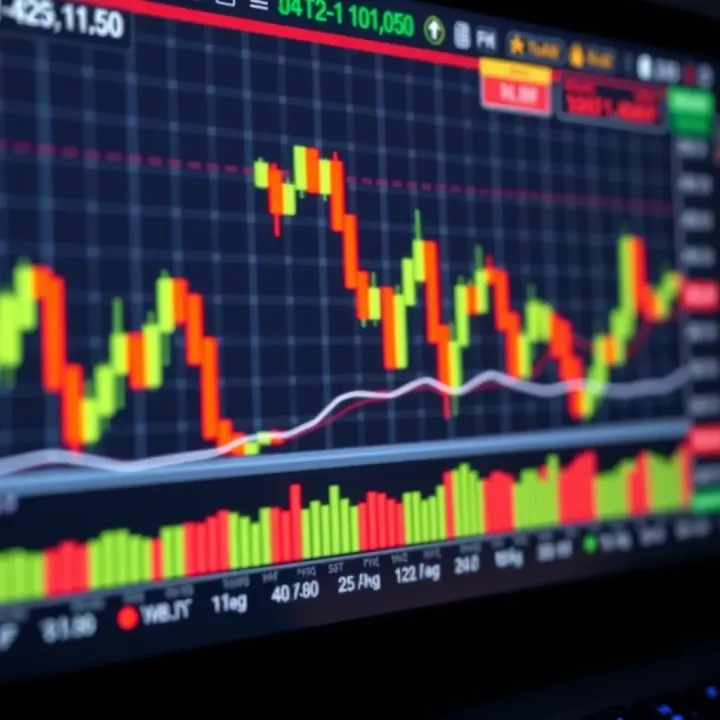
Master practical forex trading strategies for Nigerian traders 🇳🇬. Learn key concepts, risk tips, technical analysis, and trading psychology for steady wins 📈.
Based on 14 reviews