
How to Start Forex Trading in Nigeria
Start your forex trading journey in Nigeria with this practical guide 📈. Learn how to pick brokers, open accounts, manage risks, and trade safely in ₦ easily.
Edited By
Amelia Foster
Jumping into forex trading in Nigeria can seem tricky, especially when wondering how much money you actually need to start. Unlike buying a car or setting up a small shop, forex trading asks for a specific amount of capital influenced by factors such as broker policies, account types, and personal trading goals.
Generally, the minimum deposit to open a forex trading account falls between ₦10,000 and ₦50,000 with many brokers. Some platforms even allow you to start with as low as ₦5,000, but these smaller amounts often limit the trading size and potential returns. For instance, if you start with just ₦10,000, you’d trade smaller lots, which can protect you against big losses but may also slow the growth of your investment.

It's essential to balance starting small with having enough funds to cover trading costs and absorb potential losses.
Brokers set minimum deposits based on the type of account. A standard account usually requires a higher deposit, around ₦50,000. Meanwhile, mini or micro accounts cater to beginners, where the minimum might be ₦5,000 to ₦20,000. These lower entry points are helpful if you want to learn without risking too much upfront cash.
Besides broker requirements, you must consider transaction costs like spreads, commissions, and occasionally overnight fees. These costs can eat into your initial capital quickly if your deposit is too small. For example, trading with ₦10,000 while paying a 0.5% spread on each trade means you’d need to earn a little over that to break even.
Moreover, forex trading is highly leveraged, giving you the chance to control larger sums with less money. However, leverage can be a double-edged sword: while it increases profit potential, it also magnifies losses, especially for inexperienced traders.
When setting your starting capital, think about your risk tolerance, trading style, and financial circumstances. Ideally, starting with around ₦50,000–₦100,000 gives you enough room to manage trades effectively without risking your essential savings.
Typical minimum deposit ranges from ₦5,000 to ₦50,000 depending on broker and account type
Lower deposits limit trade size and potential income
Trading costs and leverage impact the effectiveness of your starting capital
Setting aside at least ₦50,000 provides better flexibility for practical trading
Being aware of these factors helps you approach forex trading with a realistic budget and clearer expectations.
Understanding what shapes the minimum deposit requirement for forex trading clears the path for anyone looking to enter the market in Nigeria. These minimum sums are not arbitrary; they stem from several practical factors, including regulatory frameworks, account structures offered by brokers, and how leverage changes the dynamics of needed capital. For you as a trader, knowing these influences helps pick the right broker and account type without overcommitting your funds.
Broker type and regulation play a significant part in setting minimum deposits. Regulated brokers, especially those operating under stringent jurisdictions like the FCA or NFA, often require higher minimum deposits to comply with consumer protection rules. In Nigeria, brokers licensed by the Securities and Exchange Commission (SEC) or registered with the Nigerian Forex Association tend to set minimums that balance accessibility with regulatory compliance. Unregulated brokers might offer very low minimums, sometimes as low as ₦1,000, but this comes with increased risk.
Account types also affect deposit limits. Brokers typically offer standard, mini, and micro accounts. Micro accounts have lower minimum deposits—often starting from ₦10,000 to ₦20,000—allowing beginners to test the waters. Standard accounts usually require larger sums; for instance, ₦100,000 or more. This setup lets traders choose an account that fits their capital and risk appetite, avoiding overexposure early on.
Leverage fundamentally changes how much you need to start. Higher leverage lets you control larger positions with smaller deposits, but it also magnifies both gains and losses. A broker offering 1:500 leverage may ask for a minimal deposit, say ₦20,000, but trading with such leverage is risky if you don’t fully understand margin calls and stop-loss orders. For Nigerian traders, it’s wise to balance leverage with sound money management rather than chasing low deposit options that leverage heavily.
Retail traders in Nigeria typically start with modest amounts. Many begin trading with ₦10,000 to ₦50,000 because it aligns sensibly with average incomes and manageable risk levels. This range allows newcomers to familiarise themselves with trading platforms and market behaviour without significant financial pressure.
Professionals, on the other hand, deploy more substantial capital, often starting from ₦1 million or above. This level of capital provides room to diversify trades, absorb short-term losses, and use advanced strategies like hedging. Professionals typically have experience and infrastructure—such as faster internet, multiple monitors, and premium analytical tools—that retail traders may lack.
For Nigerian traders, this divide underscores the importance of starting at a realistic level based on your experience and financial capacity. Trying to trade like a professional with retail-sized capital often leads to frustration and losses. It’s better to build gradually—honing skills on demo accounts before committing bigger funds.
Brokers’ deposit requirements reflect more than just broker policies; they mirror regulation, account design, and the realities of trading leverage. Knowing these helps you avoid costly surprises and plan your trading journey wisely.
Understanding the typical minimum investment amounts is vital for Nigerian forex traders to set realistic expectations and plan their initial capital effectively. This knowledge helps avoid overcommitting funds and enhances traders’ ability to navigate the market with suitable budgets.
Many brokers allow Nigerian traders to open accounts with deposits as low as ₦10,000. These low minimum deposits make forex trading accessible to young Nigerians, students, and small-scale investors who might not have large sums to start with. For example, some international brokers like XM and HotForex accept minimum deposits around this range, making entry feasible.
However, starting small has its ups and downs. On the positive side, it reduces risk exposure, letting beginners test strategies without risking big money. But the downside is that small deposits may limit leverage and trade sizes, making it harder to realise significant profits. Also, some brokers charge fixed commissions or spreads that could disproportionately affect returns on such small accounts.
When considering Nigerian incomes, especially among average earners earning between ₦60,000 to ₦150,000 monthly, starting with ₦10,000 to ₦100,000 can be sensible. Traders must balance starting capital with everyday expenses like rent, food, and generator fuel. Committing more than 10–20% of disposable income to forex trading is generally risky without stable financial backup.
Local brokers, such as FXTM Nigeria or some Nigerian brokers registered with SEC, often offer deposit options tailored for Nigerian traders. But these tend to have higher minimums or fewer account types than international counterparts. International brokers commonly provide more flexible deposit sizes and wider currency pairs but less local payment support.
Adding to accessibility, brokers that accept funding through USSD codes or direct bank transfers are hugely popular in Nigeria. OPay, GTBank, and Access Bank transfers streamline deposits without the need for foreign cards or complex processes. This convenience encourages more Nigerians to participate but also means traders must check transfer fees and waiting times.
Fees and charges directly affect the amount you can use for trading. High spread costs, withdrawal fees, or inactivity charges reduce your usable capital. For instance, if a broker demands a ₦500 withdrawal fee from a ₦10,000 account, that’s 5% lost already. Nigerians need to consider these costs carefully to avoid unnecessary depletion of their trading fund.
Starting with affordable deposits and working with brokers that respect local payment habits can improve your forex trading journey significantly. But always weigh cost against service quality.
In summary, Nigerian traders have multiple options ranging from ₦10,000 to ₦100,000 as minimum deposits. Knowing the trade-offs when starting small, the brokers who cater best to Nigerians, and the hidden costs ensures smarter decisions and better control over your forex investment.
When you begin forex trading with small capital, understanding the risks is key. Starting with limited funds often means tighter margins for error and less room for manoeuvre when the market moves against you. Nigerian traders especially need to be cautious because forex trading requires careful money management and clear expectations to avoid wiping out scarce resources.
Leverage allows traders to control large positions with a small amount of money, but it can quickly become a double-edged sword. When you start with little capital and use high leverage, even minor market fluctuations can wipe out your funds. For example, a ₦10,000 trading account using 1:100 leverage means you control ₦1,000,000 in the market. A small 1% adverse move will erase your capital. This risk is particularly relevant for Nigerian traders unfamiliar with managing leverage, who may think it’s an easy way to boost profits without grasping potential losses.
With small investments, trading costs play a bigger role in your bottom line. Spread—the difference between buying and selling price—along with commissions can swiftly eat into your profits or even push a trade into a loss before the market moves in your favour. For instance, if your profit target is ₦500 but the spread and commission total ₦300, your net gain is only ₦200, making it harder to grow your account steadily. Nigerian brokers with higher spreads or hidden fees can worsen this, so traders need to factor these costs when choosing a broker.
Tight capital limits increase pressure and can affect decision-making. When your account balance is low, every trade feels like a big deal, often leading to emotional choices such as overtrading, revenge trading, or prematurely closing positions. This psychological strain can ruin a trading plan even for experienced traders. It's crucial to stay disciplined and understand that losses are part of the process, especially with small starting funds.
When trading with limited capital, setting realistic goals matters more than chasing unrealistic gains. Trying to double a ₦50,000 account in a week is not practical and can lead to reckless trading. Instead, aim for consistent small profits—say 5 to 10 per cent per month—which can build your funds steadily without exposing you to high risks. This approach teaches patience and discipline, traits essential for long-term success in the Nigerian forex scene.
Demo accounts offer a safe environment to grasp forex dynamics without risking your ₦. Many brokers in Nigeria provide these practice accounts, which mimic real market conditions. Using a demo account helps to test strategies, understand leverage effects, and learn how spreads affect profit. Practising before trading live reduces costly mistakes, giving you confidence when you finally invest real money.
Beginners often focus on quick wins through day trading or scalping, but limited capital may not sustain this style due to costs and market volatility. Considering a longer-term outlook—holding positions over days or weeks—can reduce transaction costs and emotional stress. Long-term trading aligns better with smaller funds, allowing price movements to produce meaningful gains. Nigerian traders juggling work and market access also benefit from this patient approach, avoiding constant screen time and stress.
Start small, but be wise. Managing risk, costs, and your mindset are the most valuable muscles to build before chasing big profits in forex trading.
Knowing how much money to start trading forex with can save you unintended losses and frustration. Many new traders rush into forex using whatever funds they have without considering their overall financial health or the hidden costs involved. This section focuses on practical tips to help Nigerian traders decide starting capital based on their personal situation, while minimising the risk of hitting financial potholes.
Before putting your money in forex, you must budget carefully to avoid endangering your daily livelihood. For instance, if you earn ₦100,000 monthly, allocating ₦5,000 to ₦10,000 for trading is wise, leaving enough for rent, food, transportation like okada or danfo, and other necessary expenses. Don’t use money meant for essentials such as school fees or medical bills. Trading is not a get-rich-quick scheme; it's better seen as a small, calculated investment.
Electricity supply is unreliable in many parts of Nigeria, so the cost of running a generator must be factored into your trading budget. Running a generator one to two hours daily can add ₦1,000–₦2,000 weekly on fuel alone. Likewise, a stable internet connection—often via a data plan from MTN, Airtel or Glo—is critical. A dependable 4G data plan might cost around ₦2,000 weekly. Without these, you risk missing timely trade executions, which can drain your capital quickly.
Forex trading requires skill built over time. Set aside part of your budget specifically for educational materials and tools. Whether it’s subscribing to a trading course, buying eBooks, or using paid charting software, investing about ₦5,000 to ₦10,000 monthly into learning will improve your chances of making profits. Ignoring this investment could leave you making reckless trades just because you don’t understand the market well.
Demo accounts offer a risk-free environment to practise trading with virtual money. This is golden for beginners to understand forex platforms, test different strategies, and get comfortable with navigating price charts without losing a kobo. Many local brokers offer demo accounts alongside live accounts, so you can sharpen your skills before putting any real money in.
When you feel confident with your demo results, start live trading with a small, affordable amount. It’s common for beginners to be overconfident after demo success, but remember, real money trading involves emotions like fear and greed that demo accounts don’t simulate. Begin with small trades, say ₦10,000, and gradually increase as you gain experience. This step helps manage risk and adjusts your mindset to real market pressures.
Keep a trading journal detailing your wins, losses, strategies used, and emotions during trades. Regular review helps identify what works and what doesn’t, guiding how much capital you should allocate going forward. For example, if after two months at ₦10,000 your losses consistently outweigh profits, consider lowering your trading amount or taking a break to study more. This disciplined approach will protect your capital and grow your trading skill responsibly.
Starting forex trading with the right mindset and financial planning is more than just meeting the minimum deposit; it’s about building a foundation that can withstand the ups and downs of the market.
By approaching your forex journey with realistic budgeting, factoring in all related costs, and practising extensively on demo accounts, you increase the chances of trading success while keeping your financial safety net intact.
Start your forex trading journey in Nigeria with this practical guide 📈. Learn how to pick brokers, open accounts, manage risks, and trade safely in ₦ easily.
Ready to start forex trading in Nigeria? Learn how to pick trusted brokers, manage risks, and grow your ₦ safely 📈💹 with practical, local tips tailored for you.
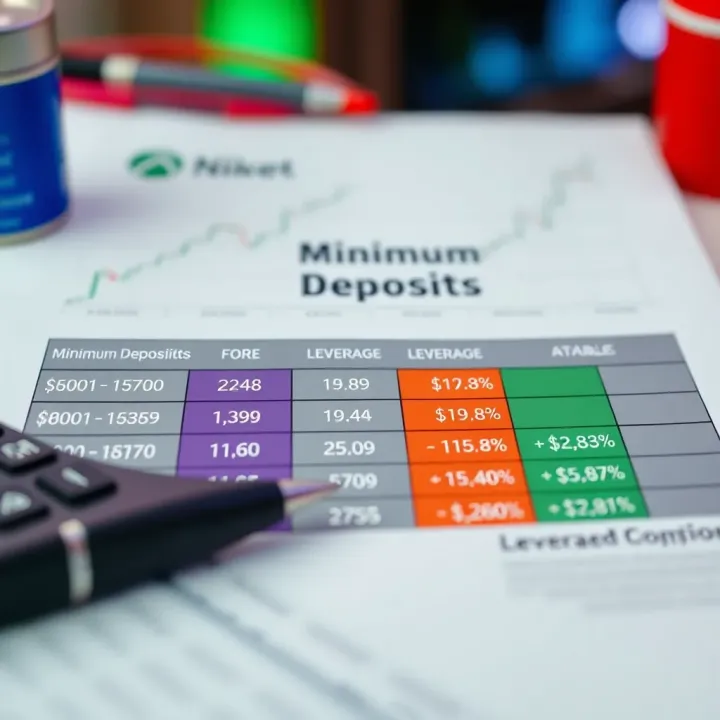
Wondering how much ₦ you need to start forex trading in Nigeria? Learn about broker minimums, leverage options, risk factors, and smart budgeting tips to trade confidently 💹📊.
Learn when the forex market is most active for Nigerian traders ⏰, including top trading sessions and tips to boost your ₦ trading strategies effectively 📈.
Based on 10 reviews