

Types of Risk Management and Their Uses
Explore types of risk management📊 like financial, operational, and compliance risks, plus how Nigerian businesses can apply them to protect profits and reputation effectively🔐.
Edited By
Amelia Ward
Risk management is not just a fancy term for business owners and investors in Nigeria; it is a practical necessity. Whether you are trading on the Nigerian Stock Exchange (NGX), running a fintech startup in Lagos, or managing a small-market mama put, understanding risk management steps can protect your venture from setbacks.
The process starts by recognising possible threats that may affect your business operations. These threats could be economic, such as sudden naira depreciation, or physical, like security concerns around your business location. For example, a trader importing goods may face risks from currency fluctuations and government import restrictions.

Once hazards are identified, the next step is evaluating how likely these risks are to happen and their potential impact. This involves assessing both probability and severity. A finance analyst might quantify risk by looking at historical market volatility while a logistics company could consider how frequent road closures delay delivery.
After assessing risks, businesses must decide on mitigation strategies. Methods include avoiding unnecessary risks, transferring risk through insurance, reducing risk by improving security, or accepting some risks after cost-benefit analysis.
Finally, monitoring the effectiveness of these mitigation efforts is crucial. Continuous review allows companies to adapt to changing conditions such as new government policies or emerging market trends. For instance, a fintech could track transaction fraud rates after implementing new security protocols.
Effective risk management requires consistent attention. Businesses that regularly follow these steps manage surprises better and maintain stability amid Nigeria's often unpredictable business environment.
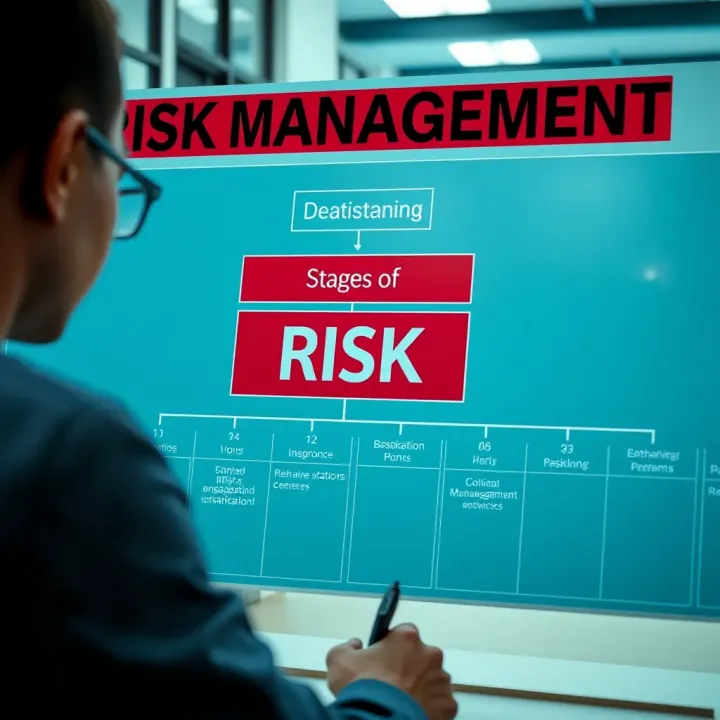
In summary, risk management involves four key steps:
Hazard identification: Spotting risks specific to your industry and environment.
Risk assessment: Measuring likelihood and impact.
Risk mitigation: Choosing how to manage or lessen risks.
Monitoring: Checking outcomes and adjusting strategies.
Simple, but when done well, these steps help businesses in Nigeria navigate challenges and build resilience in uncertain times.
Recognising and defining risks serves as the foundation of effective risk management. Without clear identification, businesses may overlook threats that can cause significant losses, especially in Nigeria's dynamic markets. Defining risks precisely enables traders, investors, and analysts to focus on the most relevant threats and plan responses appropriately.
Nigerian businesses confront risks from diverse sources, including economic instability, security challenges, and infrastructure deficits. For example, frequent fuel scarcity leads to increased generator running costs that disrupt production and impact profitability. Likewise, disruptions from political unrest in certain states or unreliable electricity supply affect operations severely. These tangible risks alongside market uncertainties such as currency volatility and inflation rates expose enterprises to financial and operational vulnerabilities.
Understanding these sources helps stakeholders anticipate scenarios that might affect investments or trading activities. For instance, investors in agriculture must consider weather unpredictability and pest outbreaks, while finance analysts watching the stock market need to factor in regulatory shifts and external shocks.
Practical risk identification leans heavily on combining past experiences with data analysis. A finance broker tracking historical market downturns gains insight into when similar patterns might recur, helping to flag emerging threats early. Similarly, leveraging business performance records and sector reports helps highlight subtle warning signs, such as repeated supply chain interruptions or fluctuations in consumer demand.
Companies also benefit from assessing data trends—say, forex rate changes impacting import costs or seasonal demand swings influencing cash flow—allowing more targeted risk detection. Experience-based judgement enriched with real figures yields deeper understanding and better preparedness.
Risk evaluation requires distinguishing between factors within the organisation's control and those outside it. Internal elements might include employee skills, equipment reliability, or financial health—things a business can improve directly. External factors, however, range from regulatory policies, industry competition, to socio-political events beyond immediate influence.
For example, a manufacturing firm may control machinery maintenance schedules internally but cannot dictate electricity supply stability. Separating these enables clearer prioritisation of manageable risks against unavoidable ones, ensuring resources target the areas with highest impact potential.

Defining the scope of risk assessment prevents spreading resources too thin or missing critical parts. Businesses should specify which departments, projects, or geographies are included. A trader focusing solely on Nigerian markets needs different risk considerations than one dealing with cross-border transactions.
This boundary setting also outlines time frames and risk categories relevant to decision making. Without it, risk management could become unfocused, addressing unlikely or irrelevant threats. For example, a fintech startup might concentrate on cybersecurity and compliance risks within its platform, rather than unrelated operational risks prevalent in traditional banks.
Clear recognition and sharp definition of risks give Nigerian businesses the edge to act before hazards become crises. Identifying where risks come from and what boundaries limit their influence makes planning practical and cost-effective.
Risks stem from economic, security, and infrastructural sources unique to Nigeria
Combining data and experience improves precise identification
Differentiating internal and external factors refines focus
Setting clear assessment boundaries enhances targeted action
This first step anchors all other stages in risk management, helping stakeholders understand and manage Nigerian business hazards realistically and confidently.
Analysing risks allows businesses and investors to understand not just what risks exist, but how serious they can be in real terms. It helps you separate risks that need urgent attention from those you can monitor. For example, a trader facing currency fluctuations needs to gauge both how often these swings happen (likelihood) and how much loss they could cause in profit margins (consequences). This analysis makes sure resources are focused on mitigating the risks with the most damaging potential.
Risk assessment can be broken into two main methods: quantitative and qualitative. Quantitative assessment uses numbers and data to estimate risk, like measuring the chances of a power outage in Lagos during ember months and calculating expected revenue loss in ₦. Qualitative assessment is more about judgment and experience, especially when data is scarce. A finance analyst might rely on qualitative insight when evaluating emerging market risks that lack clear statistics.
Knowing both the chance of a risk occurring and its impact is vital in prioritising responses. For instance, security threats in certain states may be less frequent but carry high consequences for businesses. By combining these assessments, companies can better weigh which risks require insurance or contingency plans and which can be accepted or monitored.
Once risks are assessed, they should be ranked to focus on those most likely to cause harm or incur costs. Consider a fintech startup in Lagos: it must prioritise cyber fraud risks over minor operational delays because fraud directly threatens customer trust and regulatory penalties.
Prioritising helps avoid spreading resources too thin. A broker managing portfolios will pay more attention to geopolitical risks affecting oil prices, as those can swiftly impact investments, compared to smaller risks like minor compliance changes. This step turns raw risk data into actionable insight.
Risks rarely act alone; they often interact, making the full picture more complicated. For example, an economic downturn in Nigeria might reduce consumer spending, which in turn increases default on loans, raising credit risk for banks. Recognising these links helps financial analysts to anticipate broader impacts.
Compounding risks can be particularly dangerous. If a supply chain disruption hits during fuel scarcity, transport costs rise drastically, which escalates operational expenses. Without analysing these interactions, a business might underestimate total exposure.
Domino effects happen when one risk triggers others in a chain reaction. For example, instability in the oil sector can lead to naira depreciation, which then raises import costs for manufacturers, eventually driving up prices for consumers. Understanding these chains allows investors and companies to put safeguards early in the sequence.
Detecting domino effects requires looking beyond isolated risks to the system at large. A trader might track political events knowing they could indirectly influence exchange rates, inflation, and stock performance. Planning for domino effects ensures resilience against cascading failures.
Careful analysis of risks and their interrelations is the backbone of strong risk management, ensuring business strategies are both focused and flexible in Nigeria’s dynamic environment.
Planning risk responses is a critical phase in risk management where organisations decide how to deal with identified threats. For Nigerian businesses and investors, this step helps turn analysis into action, ensuring that risks don’t derail operations or investments. Proper planning boosts resilience by providing clear strategies tailored to the risk profile and resource capacity, avoiding unnecessary panic during a crisis.
Risk treatment involves selecting the right approach to handle risk, which often includes avoiding, reducing, sharing, or accepting the risk. Avoiding risk means stopping the activity that creates exposure—this might be a trader deciding not to enter a volatile forex market. Reducing risk focuses on minimising the chance or impact, such as an investor spreading assets across different sectors to diversify portfolio exposure. Sharing risk involves transferring it, for example through insurance or partnerships, common among manufacturing firms in Lagos. Accepting risk is a conscious decision to bear the loss when the cost of mitigation outweighs the potential damage, a situation often seen in small businesses handling minor theft incidents.
Balancing the cost and benefit of these strategies is vital. Spending too much on preventing a minor risk can drain resources better used elsewhere, while insufficient response to a serious threat can cause bigger losses. For instance, a fintech startup deciding on cybersecurity investments weighs the cost of sophisticated protection against the potential loss from breaches. The idea is to achieve optimal spending where the benefits justify the cost, rather than pouring funds into all possible measures indiscriminately.
Assigning responsibilities ensures each action point in risk response has someone accountable. This avoids confusion and delays during implementation. In a trading company dealing with supply chain risks, for example, logistics managers might be responsible for monitoring supplier reliability, while finance officers oversee currency risk exposures. Clear roles make follow-up easier and boost organisational discipline.
Setting measurable objectives and timelines is equally important. Objectives like "reduce downtime by 30% within six months" provide concrete targets. Timelines promote urgency and allow progress tracking. Without these, risk mitigation efforts can drag on indefinitely or lose focus. Nigerian businesses, especially startups balancing limited manpower and funds, benefit from realistic schedules that encourage steady improvement rather than overwhelming change all at once.
Good planning turns uncertainty from a weakness to a manageable element of business. It prepares teams to respond swiftly, reducing damage and protecting investments.
By focusing on clear treatment options and well-defined plans, organisations can turn risk management from a theoretical exercise into a practical tool for business stability and growth.
Implementing and monitoring risk controls is the moment where risk management plans come alive. It's not enough to simply decide how to handle risks; carrying out those plans effectively and keeping track of their success is what really protects a business. This step ensures that strategies to avoid, reduce, share, or accept risks are put into action and adjusted as needed, especially in Nigeria's fast-changing business environment where risks can emerge quickly, such as currency fluctuations or security issues.
Mobilising resources effectively means putting the right people, money, and tools in place to manage risks. For instance, if a bank detects a cyber risk, it might allocate budget to upgrade its IT infrastructure and train staff on cybersecurity. Without proper resource allocation, even the best plans will falter. In practice, many Nigerian companies fail at this point by spreading resources too thin or delaying investments, which leaves them vulnerable.
Additionally, ensuring staff commitment and compliance is critical. Risk mitigation often requires behavioural changes, such as following new safety protocols or stricter financial controls. For example, a manufacturing firm introducing quality assurance measures must get workers on board; otherwise, efforts to reduce defects will be pointless. Clear communication, training, and leadership support help build this commitment. Without it, staff may ignore procedures, making the whole process ineffective.
Using indicators and regular reviews helps businesses check if their risk controls are working. These indicators can be metrics like the number of reported fraud cases or the frequency of equipment breakdowns. A Nigerian retailer, for example, might track sales disruptions caused by power outages as an indicator of operational risk. Scheduling regular assessments—monthly or quarterly—allows managers to spot trends and fix issues sooner rather than later. This ongoing monitoring is essential to keep risk controls relevant.
At the same time, adapting to new or changing risks is non-negotiable. Risks evolve, be it from political instability, new regulations by the Central Bank of Nigeria, or shifts in consumer behaviour. Suppose a logistics company faces growing insecurity along transport routes; its initial risk plan might no longer suffice. The company must update its controls and possibly increase security measures. Businesses that stay flexible and revise their plans regularly are more likely to survive and thrive despite uncertainties.
Effective implementation and continuous monitoring of risk controls turn plans into protective shields against real threats. Nigerian businesses that master this step gain the confidence to operate sustainably in unpredictable markets.
In summary, allocating resources wisely and securing staff buy-in kickstarts risk control success. Following up with solid indicators and adapting to evolving realities keeps the process strong. These practices are indispensable, especially when facing Nigeria's unique economic and security challenges.
Effective risk management doesn’t end with identifying and planning responses; documenting and communicating these processes is a key final step. Proper documentation ensures that an organisation has a reliable record of risks, decisions, and actions taken while communication promotes shared understanding and cooperation among all stakeholders. This is especially relevant for Nigerian businesses operating in dynamic environments where new risks emerge constantly—keeping everyone on the same page helps prevent costly oversights.
Recording risk assessments and decisions involves systematically capturing details about identified risks, their assessed impact, and the rationale behind decisions made. For example, a fintech company in Lagos might face regulatory risks; documenting how these risks were evaluated and the choice to engage legal experts for mitigation gives clarity during audits or future reviews. Such records act as a reference point, saving time and confusion for teams that rotate or changes that happen over time.
Maintaining audit trails for accountability means preserving a chronological record of who made what decision and when. This traceability is essential both for internal audits and regulatory compliance. Consider a manufacturing firm in Kano dealing with supply chain risks; if a supplier fails to deliver, having documented correspondence and decisions linked to risk management helps prove the organisation acted prudently, reducing blame or legal exposure.
Promoting risk awareness involves regularly communicating risk-related information across various levels—executives, department heads, and frontline staff. When employees understand the risks that affect their work, they become more vigilant. For instance, a retail chain experiencing security threats across outlets can equip staff with simple safety protocols, reducing incidents and losses.
Engaging stakeholders for better cooperation means involving all relevant parties in risk discussions and decisions. This includes finance teams, operations, IT, and external partners. A startup in Abuja developing payment apps, for example, benefits when IT and customer service teams collaborate on risk response plans, ensuring swift handling of data breaches or service disruptions. Such cooperation strengthens response capabilities and builds trust.
Clear documentation and open communication transform risk management from a set of procedures into a living practice that grows with the organisation. Nigerian businesses that master these steps improve resilience and position themselves to respond swiftly to surprises in challenging markets.
Explore types of risk management📊 like financial, operational, and compliance risks, plus how Nigerian businesses can apply them to protect profits and reputation effectively🔐.

📊 Learn how Nigerian businesses and public institutions can spot risks early, set clear goals, and build strong foundations for managing risks effectively.

📊 Discover how risk management in project management stops surprises and boosts success. Learn practical steps Nigerian projects use to spot, assess, and control risks.
📊 Master risk management in Nigeria's business world with our hands-on guide—learn to identify, control, and reduce risks with practical tips and helpful PDFs included.
Based on 14 reviews