

Risk Management Process for Nigerian Businesses
Learn how Nigerian businesses can identify, evaluate, and tackle risks to protect assets and comply with regulations. Stay steady despite infrastructure and economic challenges 📊⚙️
Edited By
Emily Watson
Risk management in Nigerian businesses is more than just a line item on a business plan—it’s the practical shield against daily uncertainties that could derail operations. From the relentless power supply challenges to currency fluctuations and the ever-changing regulatory landscape, Nigerian enterprises face unique risks that require tailored strategies.
Understanding the risk management process begins with recognising potential threats specific to the local context. For instance, a farmer in Oyo faces risks like drought or pest infestation, while a Lagos-based tech startup worries about unreliable internet and cyber threats. Not all risks come from external forces; internal factors such as poor financial controls or operational loopholes can also lead to loss or reputational damage.

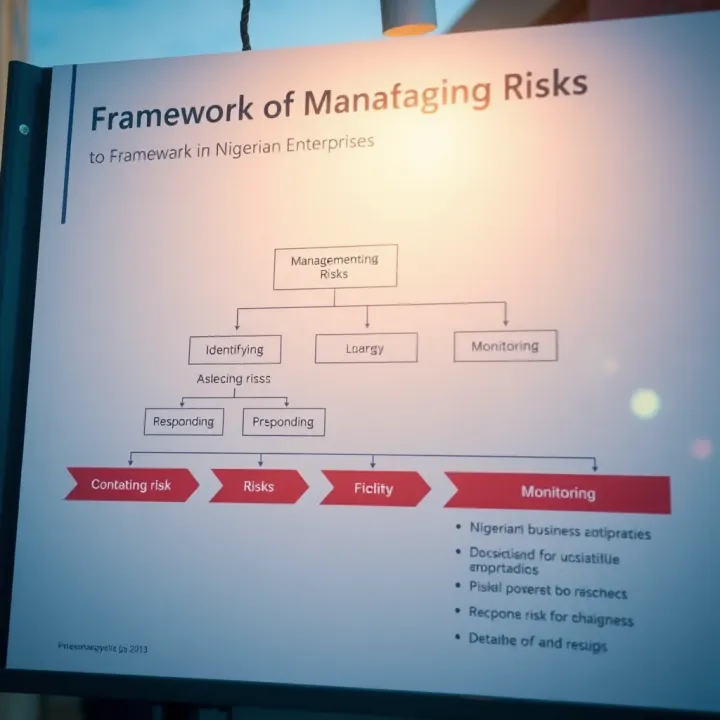
A structured risk management process typically involves five key stages:
Risk Identification – Spotting potential hazards before they strike. In Nigeria, this may mean scanning the environment for political instability, fluctuating fuel prices, or infrastructural bottlenecks.
Risk Analysis – Assessing the likelihood and impact of each risk. For example, how likely is a power outage during critical business hours, and what would be the financial toll? Understanding these variables allows businesses to prioritise.
Risk Evaluation – Deciding which risks need immediate attention and which can be monitored. If a risk carries severe consequences like complete shutdown, it demands swift mitigation.
Risk Treatment – Crafting strategies to mitigate, transfer, accept, or avoid risks. Buying a generator may be a treatment plan against power failure; purchasing insurance policies protects assets from fire or theft.
Monitoring and Review – Risks evolve, especially in Nigeria’s dynamic economy. Continual monitoring ensures businesses adapt their strategies promptly to new challenges such as currency depreciation or policy shifts.
Effective risk management turns uncertainty into manageable business challenges, helping companies to not just survive but grow in Nigeria’s complex market.
Being proactive with risk management means Nigerian businesses safeguard their investments, protect stakeholders, and build resilience to unexpected shocks. This foundation is essential to thrive in sectors where the smallest oversight can snowball into significant losses.
Identifying risks unique to Nigerian businesses forms the foundation of effective risk management. Nigeria's complex economic environment, challenges with infrastructure, and evolving regulatory landscape mean risks here differ significantly from other markets. For example, a Lagos-based retailer must factor in frequent power outages and naira volatility that can swiftly upend daily operations and cost calculations. Recognising these specific risks early helps businesses prepare pragmatic responses rather than relying on generic plans.
Nigeria’s inflation rate has hovered between 15% to 20% recently, sharply increasing costs for many enterprises. For instance, a food processing company may see raw material prices spike unexpectedly, squeezing profit margins. Exchange rate fluctuations also add pressure, especially for businesses dependent on imported inputs where naira depreciation inflates costs in dollar terms. These economic risks can disrupt budgeting, pricing strategies, and overall financial stability.
Operationally, Nigerian businesses grapple with inconsistent power supply. Many rely on generators, increasing overhead with fuel costs often rising during ember months. Additionally, poor road networks, especially outside urban centres, can stall deliveries and affect supply chains. An agribusiness exporting produce to ports may face delays that cut into product shelf life. These challenges highlight operational risks that directly impact efficiency and service quality.
Security concerns remain a practical threat, particularly in areas with limited police presence. Retail outlets and warehouses may become targets for theft or vandalism, causing inventory loss and disrupting business continuity. For example, petrol stations in the Niger Delta region have faced vandalism, forcing temporary closures. Implementing security measures like CCTV and neighbourhood watch is not just advisable but often necessary.
Nigeria’s regulatory environment can shift rapidly, with new tax policies or trade tariffs appearing unpredictably. Businesses must stay alert to such changes to avoid penalties or operational hiccups. For example, sudden adjustments in import duties by the Nigerian Customs Service can impact costs for manufacturers relying on foreign raw materials. Maintaining up-to-date compliance frameworks and consulting regulatory updates regularly reduces surprises that hurt bottom lines.
Gathering input from employees across departments offers diverse perspectives on potential risks. A marketing team might spot reputational threats from social media, while operations flag logistics bottlenecks. Holding structured brainstorming enables Nigerian businesses to capture real-life challenges faced at different levels. For example, a fintech firm might use such sessions to understand cyber risks alongside traditional operational issues.
Conducting SWOT (Strengths, Weaknesses, Opportunities, Threats) analysis adapts well when modified for local realities. Identifying weaknesses like dependence on unreliable power or opportunities through emerging digital payments provides a practical risk overview. Nigerian companies can thus map internal and external factors shaping risks and leverage strategies suited to their environment.
Engaging with sector specialists or consultants brings expert insights on evolving risks. For instance, advising from a seasoned agritech consultant helps an agricultural enterprise anticipate climate risks and market shifts. Such consultations also offer benchmarks from similar businesses, making risk identification more informed and targeted.
Analysing previous loss events and business data informs which risks are recurring and their impact. A logistics company reviewing delivery delays can pinpoint infrastructure issues and seasonal patterns affecting efficiency. This data-driven approach sharpens risk awareness, enabling proactive measures rather than reactive fixes.
Identifying risks specific to Nigeria empowers businesses to act swiftly and accurately. Without this, enterprises risk misallocating resources and leaving vulnerabilities exposed in a challenging business climate.
Assessing and prioritising risks is a critical step in managing uncertainties that Nigerian businesses regularly face. Without a clear evaluation, companies may wrongly allocate scarce resources or overlook pressing threats like currency fluctuations or power supply disruptions. Proper assessment helps identify which risks could cause the most damage and therefore deserve urgent attention.
Risk probability is about estimating how likely a specific risk event might occur. Nigerian businesses must consider local factors, such as political instability ahead of elections or the usual fuel scarcity during ember months, which can suddenly spike the chance of operational disruptions. For instance, a logistics firm in Lagos will rate the likelihood of danfo-related delays differently compared to one operating in a less congested city.
Calculating the potential cost of risks helps businesses understand the stakes involved. For example, a power outage might cost a manufacturing plant not just in lost production hours, but also in increased diesel consumption for generators—adding both operational and financial strain. This dual impact requires businesses to move beyond just imagining the worst-case scenario and instead quantify losses to make effective decisions.
Risk matrices and heatmaps provide visual tools to plot risks based on how likely and how severe they are. For example, a heatmap might place naira devaluation in the high-probability, high-impact corner for import-dependent companies, signalling immediate prioritisation. These visuals make it easier for management teams to quickly spot critical threats and discuss strategic responses.
Not all risks deserve equal attention. Businesses need to rank risks by how severe their impact could be and how soon they might occur. For example, an upcoming change in the Nigerian tax code could be a high-severity risk but with enough lead time to prepare. Conversely, sudden security incidents like armed robbery near a warehouse require immediate, high-priority action.
Since resources—money, time, manpower—are limited, businesses must decide how to allocate them wisely. Investing heavily in insurance, for instance, makes sense for high-value assets but might not be practical for smaller inventory at a mama put. Resource allocation should also consider cost-benefit trade-offs to avoid overspending on low-risk areas.
Using clear frameworks, like the Risk Priority Number or decision trees, aids consistent and objective risk prioritisation. These tools guide business leaders by bringing structure to complex choices, especially in Nigeria’s dynamic environment with shifting policies and market sentiments. Frameworks also help justify decisions to stakeholders, from investors to regulators.
Effective assessment and prioritisation of risks can save Nigerian businesses both money and reputation. It ensures energy and funds target the most dangerous threats without spreading resources too thin.
In summary, assessing and prioritising risks involves understanding the probability and impact of threats unique to Nigerian business settings, then ranking and responding based on severity and urgency while carefully managing limited resources. This approach builds a solid base for managing risks proactively and sustainably.
Managing risks goes beyond identifying and assessing them. Developing concrete strategies to handle risks is vital for Nigerian businesses to maintain stability and keep operations running smoothly despite challenges. This phase determines how a company responds to potential threats—whether by avoiding, transferring, or accepting risks—tailored to Nigeria’s unique business environment.
Sometimes, the best way to limit risk is to adjust how business is done. For example, a Lagos-based manufacturer facing frequent power outages might switch to energy-efficient machinery that needs less electricity or shift production hours to times when power supply is more reliable. Changing processes can also mean updating procurement procedures to avoid unreliable suppliers, reducing exposure to delays or substandard inputs. These changes help reduce the chance of disruptions costing time or money.
Security remains a major concern for Nigerian businesses, with theft and vandalism common in many areas. Installing CCTV cameras, hiring professional security teams, and using access controls protect physical assets. On the digital side, deploying firewalls and antivirus software shields sensitive data. For instance, a retail store in Abuja might invest in better locks and security guards, lowering theft risks, while a fintech company in Lagos adopts cybersecurity protocols to safeguard customer information. These measures directly reduce risk exposure.
Relying on a single supplier or transport route poses high risks in Nigeria, where strikes, roadblocks, or fuel shortages can disrupt logistics. Businesses managing these risks often diversify suppliers or use multiple routes. A food company sourcing tomatoes from both Kaduna and Kano states spreads risk; if one region experiences delays, the other can fill the gap. Similarly, transporters may switch between road and rail when necessary. This flexibility keeps supply chains agile.
Insurance transfers financial risks to providers, providing a safety net for businesses. In Nigeria, companies commonly get policies for fire, theft, and business interruption. While premiums can be high, insurance protects firms in case of major losses. For example, a manufacturing firm might insure its equipment against fire damage to avoid crippling repair costs after an accident. Choosing the right policy depends on the business size and risk exposure, but insurance remains a practical way to manage high-impact risks.
Some activities carry inherent risks better handled by specialists. Outsourcing tasks—like IT management, transport, or facility maintenance—shifts responsibility and risk to expert service providers. For instance, many Nigerian banks outsource their data centres to firms that guarantee uptime and implement advanced security, reducing operational risks. This approach lets businesses focus on core competencies while limiting liability from peripheral functions.
By entering partnerships or joint ventures, businesses share risks and resources. This is helpful in Nigeria’s volatile markets, where pooling knowledge and capital enhances resilience. For example, local construction firms might partner with foreign investors to spread financial risks linked to large projects. These collaborations often open new markets and reduce individual exposure by sharing costs and expertise.
Not all risks are avoidable or worth mitigating. Nigerian businesses must recognise when it's practical to accept certain risks, especially if costs to prevent them outweigh the benefits. A small trader in Kano might accept some level of theft risk rather than spending a large chunk of capital on security. Judicious risk acceptance balances potential loss with operational viability.
Contingency planning involves preparing for when things go wrong. Nigerian businesses often draft backup plans for power outages, supply chain failures, or cash flow crunches. For example, a restaurant in Port Harcourt may maintain relationships with multiple food suppliers and keep a standby generator to manage unexpected disruptions. Backup plans reduce downtime and maintain customer trust.
Reserving funds for emergencies is critical amid Nigeria’s unpredictable business climate. Contingency funds give companies the financial breathing space to handle shocks without derailing operations. Businesses typically set aside a percentage of monthly revenue for emergencies. This readiness proved beneficial for firms during last year’s fuel scarcity when additional cash was needed to secure fuel and maintain generators.
Effective risk management strategies are not about eliminating all risks but about managing them smartly to ensure Nigerian businesses remain competitive and resilient.
By carefully developing risk management strategies, Nigerian businesses reduce vulnerability and improve chances of long-term success.
Effective implementation and communication of risk management plans are essential for Nigerian businesses to translate strategies into action. Without clear execution and proper information flow, even the best risk policies can fall short, exposing a company to avoidable threats. In Nigeria’s dynamic environment, where factors like power instability and regulatory shifts demand quick response, implementation guarantees that identified risks are actively handled, while communication ensures everyone understands their role and the procedures to follow.
Appointing dedicated risk officers or forming risk management teams helps anchor accountability in the organisation. These individuals take charge of identifying, monitoring, and mitigating risks, making it easier to manage challenges such as currency fluctuations or supply disruptions. For example, a manufacturing firm in Lagos might assign a team to monitor power supply status and liaise with generators to prevent costly downtimes.
Training ensures all employees know how to respond to risks, follow protocols, and keep the business protected. For instance, banks during ember months train staff on handling fraud risks heightened by increased transactions. Such training prevents confusion and builds confidence, helping staff identify early warning signs like suspicious transactions or market changes.
Holding individuals accountable for their risk management duties prevents loose ends that can jeopardise business continuity. Clear accountability fosters responsibility, encouraging workers to report incidents promptly. A logistics company, for example, may hold fleet managers responsible for security measures against theft or vandalism during transit across high-risk areas.
Making risk policies accessible to everyone in the business with regular updates strengthens understanding and compliance. When a fintech startup, for instance, outlines data privacy procedures clearly, it reduces vulnerabilities to cyberattacks. Consistent sharing promotes a culture where staff know what to do without second-guessing.
Leveraging communication tools like intranet portals, WhatsApp groups, or internal email newsletters makes it easier to quickly distribute risk information and critical updates. During volatile exchange rate periods, a trading firm could send alerts about currency risks via instant messaging, helping traders adjust decisions in real time.
Opening channels for staff to report concerns or give feedback uncovers emerging risks that top management might miss. For example, a supermarket chain might encourage store managers to report unusual inventory shortages or supplier issues, enabling swift corrective actions. This feedback loop makes risk management more dynamic and responsive.
Clear roles and open communication are the backbone of practical risk management. Nigerian businesses that put these elements in place are better positioned to withstand shocks and maintain smooth operations.
Monitoring and reviewing risks regularly is a non-negotiable part of risk management for Nigerian businesses. Risks in Nigeria can change quickly due to economic swings, policy shifts, or sudden infrastructural hiccups. Without consistent oversight, a business might miss early signs of trouble or fail to update its risk response in time. For instance, a retail company in Lagos could see rising theft cases in its supply chain; if this isn't tracked continuously, losses can worsen before the business realises the scale.
Early warning systems act like an alert mechanism, signalling when a particular risk factor is trending beyond normal levels. In Nigeria, this could mean monitoring exchange rate fluctuations or electricity supply interruptions that impact operations. By setting thresholds — say, a rise in fuel price beyond a specific point or frequent power outages in a district — businesses can get alerts early enough to react appropriately.
These systems typically rely on collecting real-time data and comparing it against historical trends or expected benchmarks. For example, a manufacturing firm may notice when the frequency of generator fuel deliveries drops, potentially indicating supply chain disruptions ahead. Early warnings allow the management to act swiftly, such as switching suppliers or rationing fuel use.
Technology plays a vital role in keeping risk monitoring up to date. Smartphone apps, cloud platforms, and even simple dashboards can collect and display key risk metrics continuously. Nigerian businesses are increasingly adopting fintech solutions and IoT devices to track sales trends, employee attendance, or stock levels, all of which tie into risk management.
For example, a logistics company could use GPS tracking linked to a control dashboard to monitor okada or danfo routes and identify areas with rising security threats. Real-time data helps stop minor problems from becoming big losses. While tech tools require investment, their cost is often justified by the speed and accuracy they add to risk response.
A periodic audit helps businesses check if their risk controls remain effective. In Nigerian settings, where conditions change fast, what worked six months ago may no longer suffice. Audits test existing policies, like security protocols or compliance with recent government regulations, to find gaps.
For instance, an audit might reveal that checkpoint staffing levels are too low to deter theft in a warehouse, signalling the need for strengthening controls. Regular reviews prevent complacency and ensure every control measure pulls its weight.
After audits and continual monitoring, businesses must update their risk management plans to reflect new realities. This includes revising budgets, reallocating resources, or even dropping outdated strategies. In Nigeria, where inflation or import restriction policies shift frequently, plans must stay current.
A retailer might increase contingency funds after noticing an upward trend in currency devaluation, or a tech startup may pivot its supplier choices following new electricity tariff hikes. Without such updates, the risk plan becomes a document that looks good on paper but fails in practice.
Beyond internal audits, external shifts demand attention. Political changes, policy reforms, or alterations in consumer behaviour can all affect risk profiles. Nigerian businesses must stay alert to these changes to avoid being caught off guard.
For example, a change in import duty rates on certain goods can suddenly raise costs. Adapting might involve sourcing locally or renegotiating contracts. Keeping an open line to industry networks, government notices, and media reports can provide early hints for adjustment.
Regular monitoring and review provide the feedback loop that keeps risk management active and relevant. Nigerian businesses that make this a habit are better placed to survive shocks and seize opportunities despite uncertainty.
Learn how Nigerian businesses can identify, evaluate, and tackle risks to protect assets and comply with regulations. Stay steady despite infrastructure and economic challenges 📊⚙️

Learn practical steps of risk management for Nigerian businesses 🇳🇬, covering hazard identification, assessment, and monitoring to protect against economic and security threats.

Explore types of risk management📊 like financial, operational, and compliance risks, plus how Nigerian businesses can apply them to protect profits and reputation effectively🔐.
📊 Learn how Nigerian businesses and public institutions can spot risks early, set clear goals, and build strong foundations for managing risks effectively.
Based on 8 reviews